
Well, that confirmed my long-standing belief that Spain is the best bet for high-value red wines. We had a reasonably good regional variation (Rioja, Ribera del Duero, Bierzo, Ribiera Sacra, Manchuela, Priorat) and a wide assortment of varietals (Tempranillo, Mencia, Garnacha, Bobal). However, given the amazing variations across Spain's many wine growing regions, we barely scratched the surface. The one common element across all of them was value. You'd be hard pressed to get bottles this good for the same price from Californian or French producers. And every one of these wines had great potential for pairing with food.
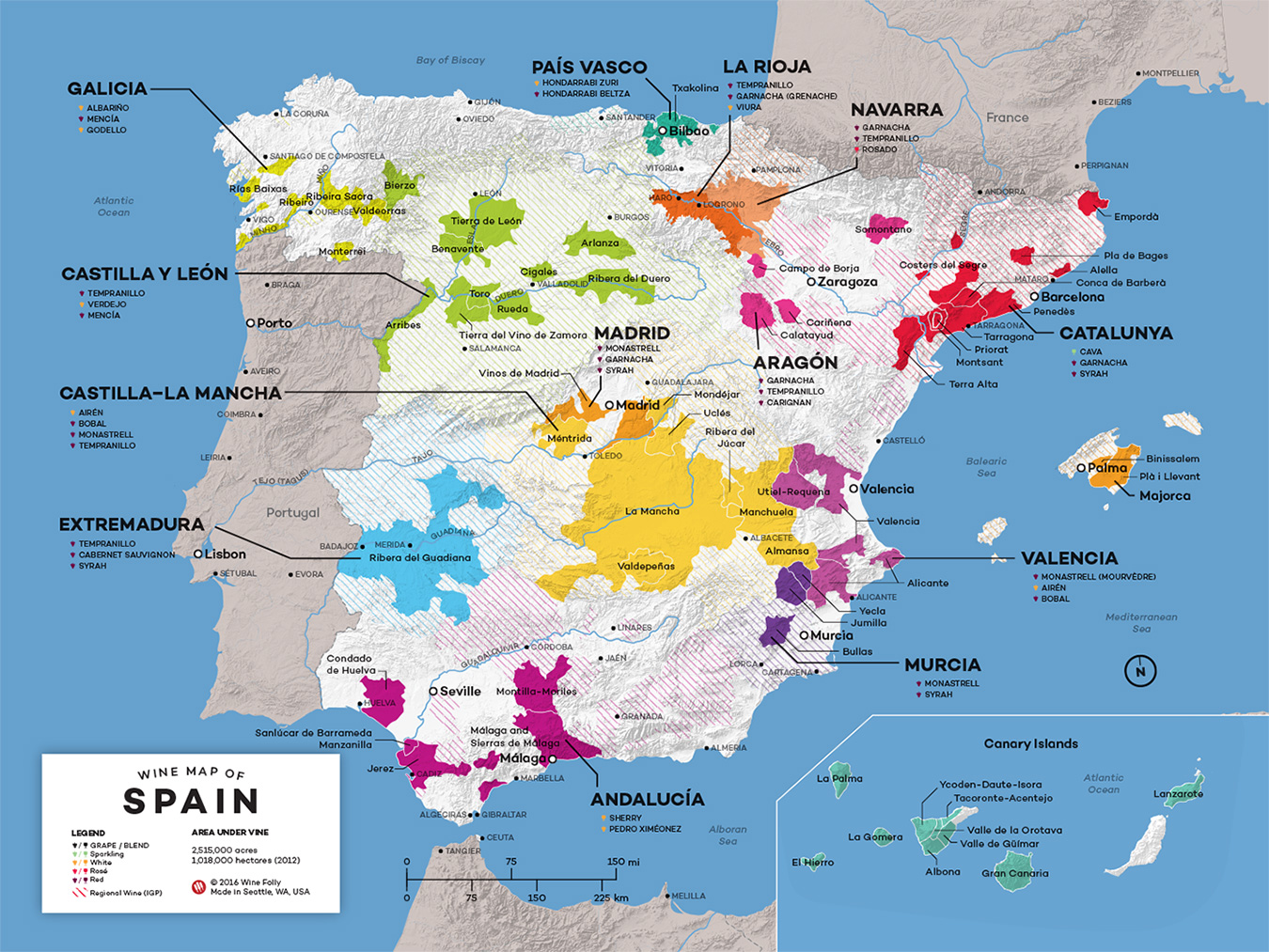
Without further ado, here's what we drank (my favorites in bold, and here's a map if it's helpful):
- 2017 Bodegas y Viñedos Ponce "La Estrecha" Manchuela ($27): ah, now here's a very light summer red, very easy drinking, no rough edges. Made from Bobal, a grape varietal I'd never had before. Lovely, but I wish it were about $10 less. Wine Advocate 96 pts.
- 2016 Castro Candaz "Finca El Curvado" Ribeira Sacra ($33): a field blend of mostly Mencía with some Merenzao (aka Trousseau), Brancellao, and Godello, this was my favorite of the night. A lighter red, reminiscent of better French cru Beaujolais wines, this was vibrant and alive in the glass. I'd be even more excited if it were a little cheaper, but I'm buying more of this. 5,000 bottles made, Wine Advocate 93 pts.
- 2017 Raul Perez "Ultreia St-Jacques" Mencía Bierzo ($18): A field blend of Mencia, Alicante Bouschet, Pan y Carne and some white varieties, fermented with natural yeast in old oak tanks using 100% stems and no temperature control. Of the three under-$20 bottles that we tried, this was my favorite (although I also quite like the Lesmos Rioja). Decanter 93 pts:
- 2016 Raul Perez La Vizcaina "El Rapolao" Bierzo ($35): another Mencia-based blend from the same wine-maker as #3, this one clearly was the "better" bottle, showing what you get when you spend more. However, while I thought this was good, I didn't think it was very distinctive or interesting. 900 bottles made, Decanter 96 pts.
- 2010 Bodegas Casa Juan Señor de Lesmos Reserva Rioja ($40 in magnum): poured from the big bottle, I think this is a great example of why Rioja is my favorite red wine at the $20 price point. This is 9 years old, has some real character, would pair well with a wide range of food, and does not taste like generic supermarket wine (as do so many New World wines in this price bracket).
- 2009 Bodegas Muga "Selección Especial" Reserva Rioja ($40): a nice demonstration of what you get when you spend more in Rioja, I thought this was like #5 but with more everything. Will get better with age. A blend of 70% Tempranillo, 15% Garnacho, 10% Graciano and 5% Mazuelo, 240,000 bottles produced (!!), Wine Advocate 92 pts.
- 1973 Vina Berceo Gran Reserva Rioja (~$50): wow, thanks to Orion, we had a chance to try this 46 year old bottle. The wines of Rioja are known for their aging potential, especially for the Gran Reserva selections, but nearly a half century is quite a feat. While all the rough edges had been polished off from this, it still had some acid on the finish and a lovely, sherry-like quality. Still drinking quite well, which is a small miracle.
- 1996 Bodegas Reyes "Teofilo Reyes" Ribera Del Duero ($35): Ribera del Duero competes with Rioja for making great reds from Tempranillo. With 23 years on the bottle, I thought this was a fantastic value at $35 (sadly, there were only a couple bottles at K&L and they've since sold out). Wine Enthusiast 94 points.
- 2016 Black Slate "Porrera" Priorat ($18): 50% Garnacha, 40% Cariñena and 10% Cabernet Sauvignon. This was my least favorite of the three under-$20 wines that we tried, striking me as a relatively generic "international" style red. Perfectly good, mind you, but just not terribly different from lots of other inexpensive reds. Perhaps a sign that the much-praised Priorat region is now attracting wine makers who are producing wines to appeal to the large export markets? 35,000 bottles made, Wine Advocate 92 pts.
For more details on these wines, you can also look at the tasting notes cheat sheet that I used while pouring.

No comments:
Post a Comment