Showing posts with label wine. Show all posts

27 January 2026

Wine Tasting: Tête de Cuvée


Another tête de cuvée evening in the books! We've been doing this for 19 years now (see here for notes from all of them). Thanks to all who attended and helped defray the (considerable) cost of these bottles. The crazy inflation on these bottles continues, especially the ultra-premium brands like Cristal and Krug. To take one example, the Krug Grand Cuvée was $170 in 2020, and now runs $260 -- a 53% increase, which is twice the rate of general inflation for the period. 

Having three 2007 blanc de blancs (all 100% Chardonnay) was a special treat. Interestingly, the Taittinger and the Billecart-Salmon did a better job staking out the two poles of champagne styles than the Dom and Dame did; the Billecart was all citrus drive, while the Taittinger was rich and yeasty. The Dom Ruinart split the difference between them, I thought. 

The Taittinger was my wine of the night, followed closely by the 168ème Krug Grand Cuvée (a "bonus" wine I opened at the end of the night). We also poured a nonvintage Veuve Cliquot "Yellow Label" bottle as a $50 level-set -- wow, the difference is obvious when you taste it against this line up!  

With the understanding that these were all great wines, my stand outs marked in bold, complete notes here: 

  1. 2009 Dom Pérignon Brut Champagne ($250): a warm vintage delivered an unusually generous Dom, which means I liked it more than usual. The signature grapefruit pith on the finish made an appearance, but more muted than usual. I rely on the Dom to stake out the more driven style, but this year that honor really belonged to #3. 
  2. 2012 Veuve Clicquot "La Grande Dame - Yayoi Kusama Edition" Brut Champagne ($225): as usual, I liked this more than the Dom, but I also thought it was a bit soft and unfocused. Still lovely and a "drink earlier" vintage than the 2008. Always a great, reliable value, especially when Costco stocks it, as it usually does. 90% Pinot Noir.  
  3. 2007 Billecart-Salmon "Cuvée Louis" Brut Blanc de Blancs Champagne ($199): wow, so much drive, energy, and acid. A vivid contrast to #4, despite being the same year and also 100% Chardonnay. A relative bargain, compared to many of these bottles, with a long life ahead of it. 
  4. 2007 Taittinger "Comtes de Champagne" Brut Blanc de Blancs Champagne ($199): my favorite of the night, this held down the yeasty, funky, darker side of the spectrum. The Comtes de Champagne is always a favorite, and still is a great value. 
  5. 2007 Ruinart "Dom Ruinart" Brut Blanc de Blancs Champagne ($620 magnum): our first time pouring a Dom Ruinart! I thought this split the difference between #3 and #4, combining more weight with a solid beam of acidity on the finish. Good stuff, but hard to justify the price against some of the other options (at this level, I would get Cristal). 
  6. 2008 Nicolas Feuillatte "Palmes d'Or" Brut Champagne ($120): this "house" is actually a cooperative of more than 5,000 growers. This Palmes d'Or was our only 2008 vintage of the evening, and it really showed the acid-forward character common to the vintage. Quite good, and a great value, even if not quite as special as some of the other options. 
  7. Laurent Perrier "Grand Siècle" Iteration #23 Champagne ($530 magnum): always a blend of three vintages, this time 2006, 2004, and 2002. Perhaps the most balanced wine of the night, walking a middle road on weight, complexity, and acid. Very good, and usually a strong choice for near-term drinking. 
  8. 2006 Louis Roederer "Cristal" Brut Champagne ($350): a very generous version of this always excellent wine. If only it wasn't so expensive (current release is $280 at Costco!) and didn't require so much waiting. Drink these now while you wait for your 2008s. ;-) 
  9. 2012 Bollinger "La Grande Année" Brut Champagne ($399 magnum): ah, the old school. Always entirely barrel fermented; aged on the lees on cork rather than crown cap for a minimum of six years every time. Always Pinot Noir dominated (66% in this vintage), this was the darker, heavier style that I like. Generally a very good value (current 2015 vintage is on sale at Costco for $139). 
  10. Krug "19 Ème Édition" Brut Rosé Champagne ($725 magnum): although best known for their nonvintage Grand Cuvée bottle, Krug also makes a great nonvintage rosé. This one is a blend of 37 wines from 5 different years, the youngest from 2006, and the oldest from 2000. Reserve wines made up 22% of the final blend, 59% Pinot Noir (which includes the 10% Pinot Noir red wine), 33% Chardonnay and 8% Meunier. It's much heavier and more "wine-like" ("vinous" for the wine nerds) than the regular Champagnes. A food wine, but delicious. 
  11. [Special late night bonus wine] Krug "Grande Cuvée" 168ème Édition Brut Champagne ($170 on release; current release $260): The Krug Grand Cuvée 168ème is a blend of 52% Pinot Noir, 35% Chardonnay and 13% Meunier selected from several different vintages dating back to 1996, with the base being 2012. This was my other favorite of the evening, presenting all the darker, yeasty notes, but also with a sherry-like quality and decent acidity. Really a beautiful balance, which is what the Grande Cuvée is famous for. 


29 August 2025

Wine Tasting: Lighter Reds that are not Pinot Noir


Well, I'm afraid I forgot to post about the most recent wine tasting, perhaps because it was the most sparsely attended ever! My fault for sending out the invite late, and also maybe a sign that my transition to groups.io for managing the invite list still needs some work. 

The wine was nevertheless great. The focus this time was on lighter reds, suitable for a bit of chilling on a summer day. The first set were trousseau, a grape associated with the French Jura region, but also grown a few places in California. These often deliver a strong cranberry note, which I think is perfect for summer. Then a couple barbera wines from Piedmont, the varietal that the vintners drink while they wait for their fancy barolo wines to age. And finally a gamay from Beaujolais. The region gets a bad rap thanks to the "Beaujolais Nouveau" wines, but the real "Cru Beaujolais" wines are often great and age worthy. 

Here's what we had. 

  1. 2023 Sandlands Sonoma County Trousseau ($30): My favorite California trousseau. Sandlands is owned by Tegan and Olivia Passalacqua. Showcasing classic California varietals that are often relegated to the fringes of West Coast viticulture, the wines come from regions and vineyards that have been established for generations, most of them planted on decomposed sandy granite soils. This trousseau comes from the Bohan Vineyard, planted at 1400 feet, 3 miles from the Pacific Ocean.
  2. 2023 Michel Gahier "Les Grands Vergers" Trousseau Arbois ($60): Michel Gahier is an important name in Jura wines. “Les Grands Vergers” represents Gahier’s oldest Trousseau vines, planted in the 1940s on a gentle slope with superb exposure to the sun. My main recollection is that this bottle was so sour on the palate! Not in a bad way, but this one needs food, for sure. 
  3. 2023 Jean-François Ganevat "Plein Sud" Trousseau Côtes du Jura Rouge ($100): Former head winemaker of Jean-Marc Morey in Chassagne-Montrachet, Jean-François Gavenat has become one of the most talented winemakers in the Jura since he took over his family domain in 1998. This was a lovely bottle, but very hard to justify the price.  
  4. 2023 Braida "La Monella" Barbera del Monferrato Frizzante ($26): a frizzante (lightly sparkling) style. Delightful and a good value. 
  5. 2022 Vietti ''Tre Vigne'' Barbera d'Alba ($30): From one of the most esteemed producers in Piedmont, the grapes are sourced from three select vineyards in the Barbera-rich region of Alba. A great value, but perhaps a bit more serious than most people expect from a Barbera. 
  6. 2020 Château Thivin Côte de Brouilly ($30): I don't recall much about this one, but I generally endorse cru beaujolais, so try one! 

04 May 2025

Wine Tasting: Zinfandel

It has been far too long since I've held my regular wine tastings, and what better way to restart them than with my favorite varietal of all, Zinfandel. Perhaps the most of California of all wines, winemakers have taken this grape way beyond the jammy, alcoholic fruit bombs of the past (though I even like those!). And tonight's line up was from some undisputed masters of the Zin craft. My favorites in bold. 

  1. 2020 Scherrer Shale Terrace Alexander Valley Zinfandel, $42: one of my go-to Zin producers, this winery is a third-generation family-run operation in Sonoma, still making wine the old way: destemmed, but not crushed; fermented in simple open-top fermentors; and manually punched down. The Shale Terrace is made in small quantities from a small block of vineyard planted in the early 1970’s that makes a light, almost Pinot-like Zin. I thought this was very similar in style to the Sandlands (#5), but less intense.
  2. 2020 Scherrer “Old & Mature Vines” Alexander Valley Zinfandel, $42: the main wine from Scherrer, built on old vines going back to 1912, this is basically my "house red." Middle weight for a Zin, and an amazing bargain if you buy it by the case in futures ($27/btl, paid a year before release).
  3. 2019 Bedrock Lorenzo’s Heritage Dry Creek Red Wine, $50: #3 and #4 both come from the Teldeschi vineyard, one of the best zin sites in Dry Creek (which itself, is California's premier zin location). Both wines are field blends, which means that various grape varietals (here, 65% Zinfandel with the rest a blend of Carignan and Petite Sirah) are inter-planted, harvested, and fermented together. This one is made by Morgan Twain-Peterson's Bedrock Wines, while #4 is by his father, Joel Peterson, who founded Ravenswood, put quality zin on the map in the 1980s and 90s, and now owns Once & Future. The Bedrock version is more angular and challenging, in contrast to the more plush, rounded version from his father.
  4. 2019 Once & Future "Teldeschi - Frank's Block" Sonoma Valley Zinfandel, $50: probably the consensus crowd favorite, this was approachable and plush, with no sharp edges, and yet still balanced and complex enough to be worth paying attention to. Clearly a lifetime of making zinfandels has taught Joel a thing or two. The Teldeschi Vineyard Frank’s Block is from the oldest block on the estate (planted in 1904), 75% Zinfandel with the balance Carignane and Alicante Bouschet.
  5. 2019 Sandlands Lodi Zinfandel, $40: this is from another legendary zin maker, Tegan Passalaqua, who is the long-time winemaker at Turley. The Sandlands label is his side hustle, where he seeks out forgotten classic California varieties, primarily grown in sand, from regions and vineyards that have been farmed for many generations but have remained the outliers of California viticulture (e.g., Lodi, Contra Costa). Only recently has he started making zin under his Sandlands label, and this one was another crowd favorite, presenting a light, red-fruited version that was like a more intense version of #1. Great wine, and a bargain if you can get any -- Sandlands wines are sold almost entirely direct to his email list, which can take time to get onto.
  6. 2019 Bedrock Wine Co. "Noma Vineyard" Lodi Zinfandel, $35: this is from a very old, own-rooted vineyard that was about to be abandoned and turned into warehouses on the east side of Lodi. When plans for the warehouses were delayed, Bedrock stepped in to farm it until their plans changed again. Tart, just ripe, fresh blackberries, is how I'd describe it.
  7. 2019 Sabelli Frisch Faun Lauchland Vineyard Jahant Zinfandel, $32: from another micro-producer of California heritage vineyards, this was all like cherry compote, stewed strawberries, but with good acid. I liked it, but will admit that it's hard to think what food this would work with.
  8. 2019 Fogline Vineyards Zinfandel Rocky Ridge Vineyard, $50: ah, here's the old school alcoholic fruit bomb of decades past. Too sweet for many, but I liked it. Think of it as a dessert wine, and you have the right idea. 

12 January 2025

Wine Tasting: Tête de Cuvée


Another epic evening with some of the top prestige champagnes. I can hardly believe we've been doing these tastings since 2007 (see here for notes for all of them). Thanks to all who attended despite my hiking the cost to $100/person to make up for the shocking inflation on these wines (and believe me, I still did not break even!). 

This was a year of stability in my preferences: I don't like Dom Perignon, and I do like Cristal and Rare. And it's still too soon to drink the 2008s, but not too soon for the 2014 Grande Année Rosé! 

Ten different bottles from 8 different vintages, my favorites in bold (more details here): 

  1. 2015 Dom Pérignon Brut Champagne ($230): This classic bottle, synonymous with luxury and once James Bond's preferred bubbly (supplanted by Bollinger since the 1980s tho), is always a nearly 50/50 blend of chardonnay and pinot noir, it always features a pithy, citrus finish that is not my thing. That said, if it's your thing, this is another solid vintage that will only get better with age, as demonstrated by our next wine...
  2. 2004 Dom Pérignon Brut Champagne ($330): Yup, 11 more years in the bottle makes it more complex, with a hint of yeastier notes, tamping down the citrus characteristics (but they are still very much there!). The older it is, the better I like Dom Perignon, and given the 5 million bottle annual production, it's usually pretty easy to find older vintages if you look around. 
  3. 2008 Veuve Clicquot "La Grande Dame" Brut Champagne ($190): Still a perennial favorite, fully 92% pinot noir in this vintage, I continue to think this wine is both a (relative) bargain and a clear contrast to Dom Perignon, consistently staking out a darker, yeastier style that represents its pinot noir dominant blend. True to the 2008 vintage generally, however, this had a lot of acid and structure, promising a long future. Too bad I don't have any more of it! Especially because it was $127 at Costco in 2019! Should have bought a case. 
  4. 1999 Ployez-Jacquemart "Liesse d'Harbonville" Brut Champagne ($130): a tête de cuvée from a small grower-producer to mix things up! A blend of 70% chardonnay and 15% each of pinot meunier and pinot noir, all barrel-fermented (like Bollinger and Krug) and aged for six months before being bottled and then aged for more than 12 years (!) on the lees “sur pointe” (vertically, cork down) prior to disgorgement. Super-high acid on the finish put some folks off, but I think this would be a great food wine. Despite being the oldest bottle of the evening, I thought this could go many more years. A relative bargain, but more of a "specialist" bottle than a more typical big house bottle. 
  5. 2008 Taittinger "Comtes de Champagne" Brut Blanc de Blancs Champagne ($240): Always 100% chardonnay, this tete de cuvee has always been a strong performer at these tastings, and this was no exception. But as one person put it, "this wine is perfect, but it's not my favorite." I agree, and suspect this needs more time -- in contrast, the 2007 vintage, which is still available, is fantastic right now and less expensive. 
  6. 2009 Louis Roederer "Cristal" Brut Champagne ($350): We've poured Cristal at every tete de cuvée tasting and two constants have emerged: (1) age is very important -- too early and this wine disappoints; and (2) when it's had some time, it's very, very good. I wish I didn't love it so much, given the increasingly indefensible price (current release price is $300 at Costco). The two things that stood out for me this time were the bubble structure (so tiny, yet also everywhere on the palate) and the excellent integration of all the flavors (so smooth, so of-a-piece). My favorite Cristal since the 2000 that we had in 2019.
  7. 2002 & 2006 Piper-Heidsieck "Cuvée Rare" Brut Champagne ($240): This blingy flagship from Piper-Heidsieck has since been spun out into a stand-alone concern (similar to Dom Perignon, once the flagship for Moet). Since 1976, only 14 vintages have been released (basically, two or three vintages per decade). I mistakenly pulled two different vintages (I was pouring the 2002, while Orion was pouring the 2006) and while I liked the 2006, I thought the 2002 was the wine of the night. Despite being 70% chardonnay, it struck me as presenting as more yeasty and dark than anything else we had. The Rare has been a favorite of mine every time we've poured one and remains a relative bargain (current release is 2008 at $200). 
  8. NV Krug "Grande Cuvée" 170ème Édition Brut Champagne ($260): As always, the nonvintage Krug is consistent and delicious. It might not be the pinnacle of the field, but it is also never disappoints, thanks to the blending of reserve wines to meet the Krug profile. Built around the 2014 vintage, the 170th édition is composed of 51% Pinot Noir, 38% Chardonnay, and 11% Meunier and is made from a blend of 195 wines (!) from 12 different years from 1998 through 2014 (reserve wines make up 45% of the final blend). As usual, I thought this was very good. However, coming after the Cristal and Rare, I thought the bubbles seemed huge by comparison. 
  9. 2008 Deutz "Cuvée William Deutz" Brut Champagne ($175): A very good bottle from this less well-known, medium-sized house owned by Roederer. This fell on the darker side of the spectrum, along with the Rare and La Grande Dame, and I thought was a relative bargain (I might choose this ahead of the La Grande Dame for $50 less). They also make a blanc de blanc (Amour de Deutz) that has shown well in previous tastings. 
  10. 2014 Bollinger "La Grande Année" Rosé Champagne ($240): The only rosé of the evening, the La Grand Annee Rosé 2014 is a 63% Pinot Noir and 37% Chardonnay blend with 5-6% of still Pinot Noir added. Relatively inexpensive for a rosé, I really liked how the added red pinot noir seems to have lent this a calmer, more serious demeanor than the rest of the field. I dearly hope I'm not developing a rosé champagne habit, because no one can afford that...


20 December 2024

Wine Tasting: Tête de Cuvée, OpenAI edition

A very special edition of Tête de Cuvée tasting, organized for the OpenAI legal team holiday party. This marks the 8th of these I've done since 2007 (you can see notes from them all here). 

Another amazing line up, including several that I've never had before. And yet another lesson in how these wines just keep getting better with age, and maybe we shouldn't be drinking them until they are at least 15 years old (or, in the case of the amazing 2008s, perhaps 25 years). And how the Taittinger Comtes de Champagne is always such a great value. 

It now seems so quaint that just a few years ago I considered $260 an outragiously expensive bottle, now that you can't find any prestige bottles under $200 and so many are well over $300. I guess I should have bought a lot more when I had the chance (especially the 2008s). 

Here's what we had, favorites in bold (tho every one of the prestige bottles was delicious): 

  1. 2007 Taittinger "Comtes de Champagne" Brut Blanc de Blancs Champagne ($200): Always a strong performer, and a favorite in the 2022 tasting, still going strong. A crowd favorite. Complex and relaxed, this just keeps getting better every time I have it. This is a blanc de blanc (100% Chardonnay) from grand cru sites in the Côte des Blancs, a small portion aged in oak barrels, the blend then aged ten years on the lees. Only 36 vintages have been produced since the first cuvée in 1952. Annual production is estimated between 100k-300k bottles.
  2. 2008 Dom Pérignon Brut Champagne ($300): No longer part of Moet & Chandon, Dom is now a brand unto itself. I'm still just not a Dom person, mostly because I'm put off by the citrus pith finish that I associate with almost every bottle I've had, but this 2008 is more persuasive than most (tho I like the 2012 even more). Like most 2008 bottles, this still felt very young, with an intensity and acidity that presages a long life ahead. Almost always a near equal blend of Chardonnay and Pinot Noir, production is reportedly in excess of 5 million bottles. The 2008 is the first vintage ever released out of order (the 2009 was released first), dosage 5g/L.
  3. 2015 Veuve Clicquot "La Grande Dame" Brut Champagne ($200): A crowd favorite, and always a solid pick for me, this was maybe the most balanced wine of the night, without any one characteristic leaping out ahead of any others. First released in 1972, La Grande Dame is named after “Widow Cliquot”, who inherited the winery in 1805 (don't miss the 2023 movie about her!). The 2015 is the 24th vintage of La Grande Dame, 90% Pinot Noir/10% Chardonnay, disgorged in October of 2021, and finished with a dosage of six grams per liter. The colorful boxes (now 100% recyclable!) result from a collaboration with Italian ceramicist Paola Paronetto. Production estimated at 350k bottles.
  4. NV Veuve Clicquot Brut Champagne ($60): our baseline interlude to illustrate what you get for (way) less money. Although this wine often gets a bad rap, I thought it was a pretty solid rendition of champagne's virtues. Sure, it lacks in distinct personality and has big bubbles compared to the pricey bottles, but there's nothing wrong with it (it is, after all, the best-selling champagne in the US). Made from 40% Pinot Noir, 30% Chardonnay, and 30% Meunier, with 35-40% reserve wine. Entirely fermented and aged in stainless steel tanks, it spends three years on the lees.
  5. 2012 Louis Roederer "Cristal" Brut Champagne (magnum) ($700): This was delicious (and a crowd favorite), but way too young. I loved it more for the promise of what it would eventually be, than how it's drinking today. Nervous, high pitched, intense now, it will relax into something more with time. Originally created for Tsar Alexander II in 1876, who requested a clear bottle with a flat bottom so that no explosives could be hidden in the punt. Almost always 60% Pinot Noir and 40% Chardonnay, made from the same 45 plots, and only in the best years. The 2012 is the first vintage made entirely from biodynamically grown grapes, with 32% fermented in oak. Nine years spent on the lees and with a dosage of 7.5 grams per liter. Annual production is estimated at 300k-500k bottles (about 10x smaller than Dom Perignon).
  6. 2008 Pol Roger "Cuvée Sir Winston Churchill" Brut Champagne ($350): Wow, so different from the rest, this carried the "dark, yeasty" flag for this field. I loved this bottle, but I expect that many who prefer a lighter, more acid-driven style will dissent (tho, as a 2008, there was actually long, persistent acid on the finish). This prestige bottle was launched in 1984 to honor Churchill, who loved champagne and preferred Pol Roger. The blend is secret, but led by Pinot Noir to get the robust, full-bodied character that Churchill liked. The fruit is from grand cru vineyards that were under vine during the lifetime of Churchill and this is only made in the best vintages. Total production is not disclosed, but since the entire production for all Pol Roger wines is ~1 million bottles, the prestige Winston Churchill production must be tiny by Dom/Veuve standards.
  7. 2006 Piper-Heidsieck "Cuvée Rare" Brut Champagne (magnum) ($480): Another repeat favorite, and still a good value. The Cuvee Rare since been spun out into a stand-alone brand, but this vintage was still under the Piper-Heidsieck banner. Since 1976, only 14 vintages have been released. The 2006 Champagne Rare is a 70/30 split of Chardonnay and Pinot Noir from 8 different Grand Cru vineyards. Approximately 100k bottles made.
  8. NV Krug 25 Ème Édition Brut Rosé Champagne ($450): This is the one that will haunt me. So different from the rest of the field, this drank like a light red wine to me, with a dominant pomegranate note. I got a good deal on this bottle at auction, but it's punishingly expensive at retail. This multi-vintage rosé is a blend of 28 wines from 5 different years, based around the 2013 vintage, blended with previous vintages back to 2008. Its final composition is 45% Pinot Noir, 30% Chardonnay and 25% Meunier. Total production for all of Krug is estimated at fewer than 500k bottles, so the rosé is almost certainly less than 100k.
  9. Laurent Perrier "Grand Siècle" Iteration #23 Champagne (magnum) ($530): Another testament to multi-vintage blending, especially when drawn from older stock (see also Krug's Grand Cuvee), I thought this delivered the most balanced rendition of the evening, combining the citrus elements with the yeasty notes. Grand Siecle is always a three-vintage blend, released in numbered “iterations.” Since 1959, Grand Siècle has only 26 vintages in bottle format and 23 vintages in magnum. Using only Grand Cru fruit and marrying 58% Chardonnay with 42% Pinot Noir, the Iteration 23 blends reserve wines from the 2006, 2004, and 2002 vintages (making it the oldest wine of the evening) sourced from 11 different grand cru sites and was aged in bottle for 14 years on the lees. Dosage: 7g/L. Disgorged April 2020.
  10. 2012 Dom Pérignon Brut Champagne ($250): For those who lingered till the end, we cracked open this 2012 Dom. The contrast from the 2008 was startling, with this younger vintage showing a lot more complexity and darker notes (but still that citrus pith on the finish!). This one ranks among my favorite Doms (along with the 2004). 51% Chardonnay and the rest Pinot Noir and has 4 grams per liter dosage.


10 June 2023

Wine Tasting: Rioja


Still a value champion, red wines from the Spanish Rioja region are among my favorites, especially with food. Rioja produces a lot of red wine, usually made predominantly with Tempranillo, blended with Garnacha, Mazuelo, and/or Graciano. The bottles tend to be on the lighter end of the flavor spectrum (think red fruits, not black fruits), but also feature good acid and tannins, making them good both for food and aging. 

This time, I wanted to contrast the different levels from a single producer (aging minimums: crianza = 2 years; reserva = 3 years, gran reserva = 5 years), and then also across different producers. I thought that worked out pretty well, with three very different producers (and one all-grenache oddity at the end) offering contrasting styles. 

Here's what we had. I liked everything, but my favorites are in bold:

  1. 2018 Bodegas Casa Juan Señor de Lesmos Crianza Rioja ($13): located in Laguardia, this  family-run producer grows under 30 hectares of vineyards. Their crianza is ~85% Tempranillo, remainder being Mazuelo. Bright red cherry flavors make for a lighter red, great value for the money. As expected, this crianza bottle is the simplest of the three wines from this producer. 
  2. 2015 Bodegas Casa Juan Señor de Lesmos Reserva Rioja ($20): the reserva sees 27 months in barrels, then another year+ in concrete before bottling and further aging. This is reflected in more weight, darker flavors, more complexity (but less than the gran reserva).  
  3. 2010 Bodegas Casa Juan "Señor de Lesmos" Gran Reserva Rioja ($30): and, finally, the gran reserva, which delivers even more complexity, with darker cherry and black olive flavors. A great deal for the price, but out-classed by the Puelles at the same price. 
  4. 2016 Bodegas Puelles Crianza Rioja ($18): Another small producer, with 26 hectares of north facing vineyards located between 300 and 600 meters in altitude, all within the Rioja Alta village of Abalos. Aged in used French and American oak barrels (roughly 50% each), racked twice, and lightly filtered prior to being bottled and undergoing additional aging at the winery. Very different from the Casa Juan wines, with a much more generous, fruit-forward palate, which reminded me of black plums (rather than cherries). Still light on its feet, however, as a crianza should be. 
  5. 2008 Bodegas Puelles Gran Reserva Rioja ($30): very different from the crianza, this has the darker, more savory (think less fruit, more old leather) profile that I think of when I think of gran reserva. Even at 15 years, this feels like it has a long life ahead, just beginning to show tertiary flavors (leather, smoke, etc). My value winner for the evening. 
  6. 2014 López de Heredia "Viña Cubillo" Crianza Rioja ($29): Lopez de Heredia is an old-school Rioja legend, proudly still producing wine the way they were when the winery was founded over 130 years ago. Lopez de Heredia uses only estate bottled fruit from their own vineyards. Even though the Cubillo is their crianza bottle, it sees 2 years in used American oak and 2 years in bottle before release. Radically different in palate from the Casa Juan and Puelles wines, this was a crowd splitter. This was racy stuff, all sour cherries, high in acid, bracing. Still great the next morning, showing a bit more complexity, suggesting this could go many more years. I loved it! 
  7. 2010 López de Heredia "Viña Tondonia" Reserva Rioja ($50): from Heredia's Todonia vineyard, this is 70% Tempranillo, 20% Garnacho and 5% each Graciano and Mazuelo, aged 6 years in used American oak. This was pretty uptight, but got better the next morning. This shows more complexity than the Cubillo, but honestly, I'm not sure it earns the $20 premium (at least, not yet). Still, great wine and a Rioja collectible benchmark. 250,000 bottles produced! If only we could get it at the €26 price they sell it in Spain! 
  8. 2019 Pedro Martinez Alesanco Garnacha Rioja (sale $26; regularly $35): an oddity in that it's all garnacha (aka grenache), this showed a darker set of black fruit aromas and flavors, with hints of chocolate. Not what I expect from Rioja, reminding me more of Southern Rhone wines. A great deal at the sale price, tho. 


14 November 2022

Wine Tasting: Tête de Cuvée


Almost four years after the last one, we were finally able to gather again for what normally is the biennial celebration of the top bottles from the biggest producers in Champagne. 

We've been doing this tete de cuvee tasting since 2007 (notes for every one here), and we've learned a lot about many vintages of these wines over those 15 years. They are always fantastic, and their styles are pretty consistent (relative to each other) from year-to-year. That said, this time we had four bottles from the critically-acclaimed 2008 vintage, and they were great (special kudos to the 2008 Cristal, which is now nearly impossible to find and over $400 if you can find it). 

The biggest change since last time, however, were the prices. These bottles have gone way up, far outpacing inflation. Bottles that 5 years ago were $100 on release are now over $200 on release. Bottles that were $220 are now $350, $300 bottles are now over $500. It's crazy. I'm not sure I will be able to keep doing this tasting at this rate.

Here's what we had. I hesitate to even guess at the total price that these bottles would have fetched on the market today. But I can say, they were delicious, every one (but my favorites in bold, nevertheless). 

  1. Laurent Perrier "Grand Siècle" Iteration #20 Champagne Magnum 1.5L ($300 -- current release is $500+): The oldest of the wines we had, this one had all of the darker, toasty, yeasty character that I associate with well-aged Champagne. Laurent-Perrier's top bottle is always a multi-vintage blend of older library wines. Only 25 iterations have been produced in 66 years. This iteration is a cellar selection blend with 100% Grand Cru wines from 11 of Laurent Perrier's vineyards, done in stainless steel tanks. This wine combines vintages from 1999 (60%), 1997 (20%), and 1996 (20%). It is composed of 54% Chardonnay and 46% Pinot Noir with 16 years (!) of lees aging. Dosage of 8 grams per liter. Got a 100 point rating from Suckling.
  2. 2008 Dom Pérignon Brut Champagne Lenny Kravitz edition ($180 -- current price $350+): Ah, that steely, crisp, Dom style, but this time with a hint of yeastiness when compared to the Taittinger blanc de blanc. Moet & Chandon makes this no more than 6 times a decade, with a total of 43 vintages in the past 100 years. Pay no attention to the blingy Lenny Kravitz-designed label on this one, it’s still the legendary 2008 Dom, the one that critics are calling the best of the new century so far. Precisely 50/50 Pinot Noir and Chardonnay, aged almost 9 years on the lees, and held longer than most vintages before release (released out of sequence after the 2009). Moet doesn’t say, but estimates are that 2-4 million bottles are made! Dosage 5g/l. 
  3. 2008 Veuve Clicquot "La Grande Dame" Brut Champagne ($190): In previous tastings, the Grande Dame has always held down the darker, yeastier end of the spectrum (opposite from Dom Perignon). Still true here, perhaps more so given the unusually high Pinot Noir percentage (92%). I always love this wine and think it's a relative bargain (Costco routinely carries the current vintage). Made in select vintages (traditionally three times a decade), in 2008, it was 92% Pinot Noir, 8% Chardonnay, all from estate fruit.. Dosage 6g/l.
  4. 2008 Louis Roederer "Cristal" Brut Champagne ($280 -- current price $430+): I wish I didn't love this always-expensive wine so much. In fact, back in 2007, we didn't like the 2000 vintage, only to come around to loving it 10 years later. This is a fantastic bottle, living up to the 100 point scores, and still very young. So well balanced in flavors, but with a beam of acid that is less like a laser, and more like the Bifrost. Amazing. Pinot Noir (60%) and Chardonnay (40%) from 36 plots in Grand Cru terroirs, with a dosage of 7.5 g/l. For the first time ever, the winemaking team at Roederer decided to do 20% malolactic fermentation due to the massive concentration and acidity of the wine. 500,000 bottles made. 100 points (James Suckling, Jeb Dunnuck).
  5. 2008 Bollinger "Grande Année" Brut Champagne ($160): Always heavy on the Pinot Noir and made in the darker, toastier style (like the Grande Dame and Grand Siecle), I thought the 2008 showed well, promising to become more like the Grand Siecle with time. A relative bargain. Bollinger is one of the few big Champagne houses that is still family owned and only makes the Grande Année in select years. The 2008 is made entirely from estate-grown fruit and composed of 71% Pinot Noir and 29% Chardonnay. It is 100% barrel fermented in used barrels. In 2008, Bollinger used 18 of their best crus in the wine, 84% Grand Cru and 16% Premier Cru. Dosage 8g/l.
  6. 2002 Billecart-Salmon "Cuvée Nicolas François Billecart"' Brut Champagne ($180): Another great bottle in the heavier style, showing the benefits of age as compared to the 2008s. Much softer on the palate than the 08s, this one begged to pair with cheese. The top bottle from Billecart-Salmon, which is best known for its non-vintage rosé. The blend is 60% Pinot Noir from the Montagne de Reims and the Vallée de la Marne and 40% Chardonnay from the Côte des Blancs, done partially in oak (20%). Dosage is 4 grams per liter. 
  7. 2007 Taittinger "Comtes de Champagne" Brut Blanc de Blancs Champagne ($116): Got lucky and found this on sale at Costco in 2021 -- retail price was $230. The Comtes has been included in every tasting we've done, and has always been a bargain to search out. The only blanc de blanc (100% Chardonnay) in the line-up, this again delivered the goods for the steely, crisp, bright style. So good. I wish I'd bought a case. 100% Chardonnay from grand cru sites in the Côte des Blancs, with 5% aged in oak barrels, the blend then aged ten years on the lees. Dosage 9 g/l.
  8. NV Krug "Grande Cuvée" 168 ème Édition Brut Champagne ($190 -- current vintage $225): For the first time ever, I thought the NV Krug was obviously outclassed by the vintage wines (I guess that 2008 really is as special as the critics say). This is still, as always, the top shelf Champagne to buy if you're going to drink it soon. The nonvintage Krug is a blend of many, many wines from many, many vintages, all combined to hit that Krug flavor profile. It's based on the 2012 harvest, complemented by fully 42% reserve wines—a blend of 198 wines from 11 different vintages dating back to 1996. A blend of 52% Pinot Noir, 35% Chardonnay and 13% Meunier.


08 October 2022

Wine tasting: New Zealand


New Zealand! This was the first time we've ever done an all-NZ tasting, and I'd say it was a success (we drank every bottle of NZ wine that I had, plus a Russian River Pinot Noir that lingered to near the carnage -- 12 bottles total!). Thanks again to those who made it! 

Overall, I'd say these were all very good, and great values compared to California wines. The sauvignon blancs, in particular, seemed both unique (tropical fruit notes, a core of sweet fruit, but also lots of acid on the finish, almost like a more carefree version of dry German riesling) and interesting for food pairings (Thai? I think Thai!). I've never found this combination of things in sauv blanc from anywhere else. I preferred #1 and #2, which came across with more sweetness on the palate (while still being dry wines), but I'd be happy to have more of any of them. 

The pinot noirs were also very good (especially for the money), but seemed to be aiming at familiar pinot noir ideals familiar in Burgundy and California. Particularly surprising to me were the funky, earthy aromatics of these wines, which reminded me more of France than most New World producers. Great value (especially #8, which I got for half price at Last Bottle). I'm not sure I'd choose the $60 bottle over similarly priced California options, but I definitely enjoyed the cheaper bottles more than similarly priced California options. 

And, lest we forget, I really liked the rosé, too! 

Here's what we had, my favorites in bold:

  1. 2021 Craggy Range "Te Muna Road" Sauvignon Blanc Martinborough ($20)
  2. 2021 Allan Scott Sauvignon Blanc Marlborough ($17)
  3. 2021 Smith & Sheth "Cru" Sauvignon Blanc Wairau Valley Marlborough ($25)
  4. 2021 Auntsfield "Single Vineyard" Sauvignon Blanc Southern Valleys Marlborough ($20)
  5. 2021 TWR (Te Whare Ra) Rosé Marlborough ($20)
  6. 2018 Mount Edward Pinot Noir Central Otago ($30)
  7. 2018 Ata Rangi Pinot Noir Martinborough ($60)
  8. 2019 Misha's “The High Note” Pinot Noir Central Otago ($45, on sale $22)
  9. 2019 Akitu "A1" Pinot Noir Central Otago ($35, on sale $25)
  10. 2018 Valli "Waitaki" Pinot Noir North Otago ($50)


30 May 2022

Wine Tasting: Zinfandel


This tasting confirms, yet again, that Zinfandel remains my favorite varietal. Thanks to all who came and helped me reaffirm my Zinfandel faith! And a special thanks to David Barzelay, who contributed a couple bottles from the 1990s to round out our sample! 

Zinfandel is perhaps the most iconic California wine (the grape is actually descended from a varietal in Croatia, and also closely related to the Italian Primitivo), Zin generally makes a jammy, fruit-forward, high alcohol wine. It's usually blended with a small proportion of other grapes, most frequently Petit Sirah, to give it some structure (but it needs to be at least 75% Zin to say Zinfandel on the bottle). Many of the best Zins are actually "field blends," which means the vineyards are interplanted with several varietals that are harvested and fermented together. 

Here's what we had, favorites in bold: 

  1. 2017 Seghesio Sonoma County Zinfandel ($20): the first of my two reliable, benchmark $20 Zins that you can readily find. This edged out the #2 Bedrock by being a little lighter on its feet and finishing with a bit more snap. 
  2. 2018 Bedrock "Old Vine" California Zinfandel ($20): another widely available favorite at ~$20 from a respected Zin producer, this came across a bit flabbier than the Seghesio, and also with a bit too much wood on it. Still very drinkable at the price, tho! 
  3. 2018 Scherrer Old & Mature Vines Alexander Valley Zinfandel ($42): the price if you pay for it in futures is $25, which is why this is my "house red". A very light, jewel-like Zin, this is always good. 
  4. 2018 Sandlands Lodi Zinfandel ($32): the first vintage of this from the private label of renowned Zin maker, Tegan Passalacqua (who is also the winemaker at Turley). This was similar to the Scherrer, but with a bit more oak. A lovely, lighter style Zin, but outclassed by the Scherrer at the futures price (their places would flip for me, if I had to pay full retail for the Scherrer, tho). 
  5. 2019 Ridge Vineyards "Lytton Springs" Dry Creek Valley Zinfandel ($43): a reliable benchmark (along with the similarly-priced Ridge "Geyserville" bottle) field blend from a premier name in Zin makers. This vintage is 73% Zinfandel; 16% Petite Sirah; 9% Carignane; 2% Mataro. Still too young, this is one to check in on in 10 years time, when I'm betting it will be fantastic. 
  6. 1996 Ravenswood Big River Alexander Valley Zinfandel (?): the first of our three very old (by Zin standards) bottles. General consensus was that this was past its prime, but still a great lesson together with the other two in how these wines can age. 
  7. 1998 Turley Old Vine California Zinfandel ($30): another famous name in prestige Zins, this was the consensus favorite of the evening, showing fantastic integration, but still showing fruit. So good. 
  8. 2016 Storybook Mountain "Mayacamas Range" Napa Valley Zinfandel ($40): one of the few Zins from Napa Valley, I suspect this was a 100% Zinfandel (bat can't confirm that), making this wine a bit softer and less structured than the others. Lovely, but outclassed by the Ridge at a similar price. 
  9. 1991 Nalle Dry Creek Valley Zinfandel (?): over 30 years old, I thought this showed well, but unrecognizable as Zin. Instead, if felt to me like a Rioja, all leather, cedar, and tobacco. The cork had seen better days, so this might have been more oxidized than an ideal sample, but still both fascinating and good! 

04 April 2022

Wine Tasting: Malbec


It'd been a long time since I'd had any malbec. So long, in fact, that I didn't really remember what they're supposed to taste like. So here we are, trying malbecs! We had a small turnout for this one, but thanks to those who made it! 

Malbec is one of the oldest grape varietals, found in what is now France more than 2,000 years ago by the invading Romans. For many centuries, it was among the most popular wine varietals in France. Today, however, French farmers have replaced almost all of the malbec with hardier varietals. What little is grown in France now is mostly grown in the Cahors region. We had two nice, inexpensive examples from Cahors, one of which was the consensus favorite of the evening. 

Most contemporary malbec comes from Argentina, which is responsible for 75% of global production. In Argentina, the grape thrives at higher altitudes in the eastern foothills of the Andes, in a region known as Mendoza. We had 5 Argentinian malbecs, all of which struck me as offering extremely good value for money. In fact, overall, that was my impression: this stuff is a great wine value. I should be drinking it more often! 

Here's what we had, my favorites in bold. 

  1. 2018 Jean-Luc Baldès "Malbec du Clos" Cahors ($15): 100% Malbec from the young vines grown on the 2nd terrace, which is known for its calcareous and sandy-clay soils. This cuvée sees no oak. This had the most earthy nose of the evening, and came across as simple, balanced, and pleasant on the palate.
  2. 2019 Vaglio "Aggie" Malbec Uco Valley ($13): 100% Malbec from Capataz, a 52-acre vineyard planted in 2008 at 3,800 feet altitude in Gualtallary in the northern Uco Valley. The fruit is destemmed, then vinified with native yeasts over 40 days, then aged for 8 months, 40% in new French oak.
  3. 2019 Familia Zuccardi "Poligonos" Malbec Pareje Altamira  ($25): no oak and no cultured yeasts is used to make this wine, sourced from a vineyard at 3,600 feet in altitude, somewhere between San Pablo (the lightest) and Gualtallary (the most structured). I thought this offered a very nice minerality that distinguished itself from #2, and staked out the more reserved end of the Argentine bottles.
  4. 2018 Château Haut-Monplaisir "Tradition" Cahors ($17): 100% Malbec, brought up in concrete tanks and 30% neutral barrel. The consensus crowd favorite, and a great example of why it's so hard to compete with French winemakers, even at modest prices. Nice balance of structure and fruit, more linear than #1, but with more complexity than most of the Argentine competition here (but see #6, which I think edged it out).
  5. 2017 Bodega Noemía de Patagonia "J. Alberto" Malbec Rio Negro Valley ($45): A single-vineyard bottling from a field blend that is mostly Malbec with some 5% Merlot. It fermented with 20% full clusters and natural yeasts for three weeks, then had an élevage of 11 months, when 15% of the volume was kept in egg-shaped vats, 20% in concrete tanks, and the rest in used barrels.
  6. 2018 Catena Malbec Lunlunta Mendoza ($19): This wine comes from a vineyard planted in 1930 at 2700 feet. Fermented 100% full cluster in stainless steel, with half then aged in one-year-old French oak barrels. I thought this was fantastic, showing both a minerality and deep fruit, in excellent balance.
  7. 2019 Catena Malbec Paraje Altamira Uco Valley ($20): This is from Altamira, in the Southern part of the Uco Valley. This was staking out the big, lush end of the spectrum. Delicious, but I thought it was outclassed by $6, which had more structure and likely would be a more versatile food wine.

24 October 2021

Wine Tasting: Thinning the Herd


After taking a four month hiatus in light of the Delta variant, we're finally back! Thanks to all who were able to join us. 

This session ended highlighted a bunch of my favorite pandemic discoveries, including a bunch of bargains that are not likely to recur. This also made this session atypical, as I was familiar with almost every wine we had (#6 is the only one I'd not had previously). 

Here's what we had, my favorites in bold:  

  1. 2018 Tatomer Steinhugel Santa Lucia Hightlands Riesling ($20): a good, dry California Riesling, available pretty regularly at Costco. A nice alternative to the usual Chardonnays and Sauv Blancs. 
  2. 2012 Scherrer Sonoma County Gewürztraminer ($13): fantastic bargain white inherited from another winemaker to be bottled and sold by one of my favorite Zinfandel producers, Scherrer. Great on its own, or with Thai food. I've bought several cases already. Rounded and generous, without turning the corner to sweet or cloying.
  3. 2017 Qupé Santa Barbara Grenache ($20): another Costco pandemic bargain (usually this retails for $30), I'm always looking for a lighter, energetic, food-friendly red wine. This was my go-to choice until I found the next wine...
  4. 2019 Domaine Passot Fleurie Beaujolais ($16): my new favorite light, energetic red wine, this is an over-performing Costco bargain (still there this week, but who knows for how long) is 100% Gamay. It starts off juicy and red fruit driven, but ends with a surprising minerality. 
  5. 2018 Lichen "Moonglow" Anderson Valley Pinot Noir ($20): another pandemic bargain, marked down from $34, and more interesting that most California Pinots, even at its original price. I'm generally not a fan of inexpensive Pinot Noir, but this is an exception. 
  6. 2018 Fattoria Petrolo "Torrione" Val D'Arno di Sopra ($22): another solid Costco bargain (K&L has it for $25), this blend of Sangiovese, Cabernet Sauvignon and Merlot was vibrantly Italian, with a mushroomy vibe and plenty of dirt on the finish. Way better than almost any California red at this price, and a natural pairing with many a pasta dish. 
  7. 2013 Seghesio "Pagani Vineyard - Heritage Red" Sonoma Valley Red Blend ($20): another pandemic bargain, this time from K&L Wines, this is regularly a $36 bottle, and is also nicely aged already. I bought a case. Grapes from one of the legendary Sonoma Zinfandel vineyards, also known for Alicante Bouschet and Muscadelle. Not sure the blend on this, but it tastes like a field blend, with more structure and verve than a 100% Zin usually shows. Would be my favorite Zin of the pandemic, but for the next wine...
  8. 2018 Limerick Lane Estate Russian River Valley Zinfandel ($20): this is the main wine from Limerick Lane and always a great bottle. But because they had a bunch of inventory that restaurants turned back, the winery offered it to their mailing list last year at wholesale price (regular price is $40). My only regret is that I didn't buy a couple more cases. This is everything I love about Zin, delivering rich, black fruit, almost opulent, but still in balance. I will miss this once I drink the 5 bottles I have left. 
  9. 2013 Hawk and Horse Red Hills Lake County Cabernet Sauvignon ($20): K&L Wines touts this as "$80 elsewhere," and there are plenty of places selling it for $50. Not sure I'd be enthusiastic at those prices, but at $20, this definitely over-delivers for California Cabernet. Definitely in the dense-and-powerful style, so I'm glad someone else aged it for me. Can't think of any Cabernet for $20 that would be better than this one. 


19 June 2021

Wine Tasting: Southern Rhone


In the south of France, right near Avignon, is the wine region known as the Southern Rhone, famous for reds made mostly from Grenache, Syrah, and Mourvedre (aka "GSM" wines), and also for whites made up of lots of less common white varietals, including Grenache Blanc, Roussanne, Clairette, and Viognier. The Southern Rhone accounts for 95% of the wine made in the Rhone, which is another way of saying that it should not be confused with the Northern Rhone, which is a very different beast, famous mostly for more exclusive and expensive Syrah-driven wines (we tasted some of these back in 2015).

I've not been a fan of Southern Rhone wines in the past, but I have to admit, this tasting may have turned me around. Especially in the value-priced segment and the white wines, I thought these outclassed most California competitors. Among the more "serious" entrants, I thought they needed more aging to really show at their best, but I'm going to buy more of the last one and wait.

Generally speaking, the more narrowly specified the region on the label, the more exclusive the wine. Here's how it works, from least exclusive to most exclusive:

  • "Côtes du Rhône": more than two-thirds of the wine made in the Rhone is labeled this way. Usually the least expensive, with grapes drawn from 83,000 hectares across the region.
  • "Côtes du Rhône-Villages": grapes drawn from 3,000 hectares from 95 specific communes, required to be 50%+ Grenache. 
  • "Côtes du Rhône Villages [named village]": 18 specific appellations covering 6,500 hectares can include their village name on the label. 
  • "Cru" without "Côtes du Rhône": 17 of the best areas are permitted to label their wines without including "Côtes du Rhône" on the label. The most famous of these areas is Chateauneuf-du-Pape. 

Here's what we had, my faves in bold: 

  1. 2018 Baron de Montfaucon Côtes-du-Rhône Blanc ($17): A blend of 70% Clairette, 20% Viognier and 10% Grenache Blanc. Very nice, simple, light white. Good value. 
  2. 2019 Domaine des Sénéchaux Châteauneuf-du-Pape Blanc ($40): A mix of Grenache Blanc and Roussanne, Clairette, and Bourboulenc, from an estate dating back to the 14th century, making it one of the oldest estates in Châteauneuf. A little pricey, but I really liked this, a richer white wine style that is still balanced (i.e., not a CA Chardonnay). Great nose. 
  3. 2018 Yves Cuilleron "La Petite Côte" Condrieu ($40): OK, so this was a mistake, because Condrieu is actually a Northern Rhone region, where the whites are all 100% Viognier. But delightful, regardless! Gorgeous floral aroma, rich on the palate without anything cloying or out of place. Can't think of any CA white that competes at this price point (OK, maybe Paix Sur Terre). 
  4. 2018 Cellier des Dauphins "Réserve" Côtes-du-Rhône ($13): 60% Grenache and 40% Syrah. The big surprise of the evening, and crowd favorite. A big producer, the Union des Vignerons des Côtes-du-Rhône is a coop of 2,300 growers covering some of the best Village and Cru appellations in the southern Rhône. A great everyday value wine, clearly made to be drunk ASAP. And yes, K&L Wines still has plenty in stock. 
  5. 2018 Château Saint-Roch Lirac Rouge ($15): 50% Grenache, 30% Mourvèdre, and 20% Syrah, co-fermented. Very nice, but outpaced by the cheaper #4, I thought. 
  6. 2017 Château Pesquié "Silica" Ventoux ($26): primarily Grenache, with 10% Cinsault. Destemmed and aged in 30% concrete and 70% larger barrels. The first of the reds that I would mark as "serious," this showed a lot of drying tannins, suggesting that maybe it could use a few more years of aging. Would have been better with food, like braised lamb shanks!
  7. 2016 Domaine des Sénéchaux Châteauneuf-du-Pape ($45): 47% Grenache, 32% Syrah, 19% Mourvèdre, and a mix of 2% Cinsault and Vaccarèse. I thought this was very nice, but outclassed at the same price by #8. 
  8. 2017 Tardieu-Laurent Châteauneuf-du-Pape Vieilles Vignes Rouge ($40): This producer is basically a father-son team that sources small parcels of quality fruit from various vineyards, and seems to have done very well in a difficult vintage with this bottle. 80% Grenache, 10% Mourvèdre, 10% Syrah, done without fining and filtration. This one is cheating a little, because while it's $40 at Costco, it's really a $60 bottle of wine. And it showed -- this had much finer tannins than #7, with lots of deep fruit showing through. I'm going to buy more and put it away for 5 years. Good value, for sure. 

22 May 2021

Wine Tasting: Natural Wines


After 16 months of pandemic isolation, it was an enormous pleasure to have people over, inside, without masks (all fully vaxxed, of course). Thanks to all who came and reminded all of us what in-person festivities are like! 

This time around, we sampled what "natural wines" have to offer. I relied on a few recommendations, but mostly let the fine folks at The Punchdown in Oakland do the picking. All in all, I would say that they were...well...interesting. I generally find that many natural wines smell and taste surprising, which is to say far afield from what the varietal or region would have you otherwise expect. That's sometimes a delight...and sometimes not. At their best, natural wines have a liveliness and fresh vigor that conventional wines lack. At their worst, they can be yeasty, out of balance, and thin on the palate. So you're probably best ordering them at a restaurant that really cares about their wine list and did the culling for you. 

Here's what we had, with my favorites in bold: 

  1. 2020 Joe Swick "City Pop", Willamette Valley, Oregon ($30): Orange pét nat, sealed with a bottle cap, and thus naturally sparkling! It starts with Pinot Noir direct pressed and fermented separately. Then blend with Semillon, Roussanne, Verdelho, and Sauvignon Blanc fermented with 14 days of skin maceration. I liked it, impressed that the tannin from skin contact didn't come out too strongly with the bubbles. 
  2. 2019 La Clarine Farms "Viognier", Sierra Foothills, California ($25): Direct, whole cluster pressed and fermented in flextanks, with the second lot picked just going into the already fermenting first lot. Only ambient yeasts were used, full malolactic fermentation. Lovely, simple, quaffable. Demonstrates that not all natural wines have to be funky, cloudy, and weird. :-)
  3. 2019 Radovan Šuman "Renski" rizling, Štajerska, Slovenia ($69): Now this one is weird. Fully orange, from an earthenware tankard. It is 7 days macerated with stems and skins (delivering both color and tannin). No added yeasts, spontaneous fermentation, unfiltered, 2 years aged in oak barrels, with no added sulfur. I like it, but many hated it. Certainly not what you expect from a riesling, but if you approach it as an orange wine, I thought it was pretty great. I can't get behind that price, tho. 
  4. 2018 Radikon "Rosso", Fruili, Italy ($40): from the Oslavia region of Friuli, right by the border with Slovenia, this is a biodynamic Merlot and Pignoli blend, 18 months in 1,000 gallon oak barrels. This was the most "controversial" wine of the evening, described by some as "wine kombucha" and "great if you think of it as a lambic." Effervescent, yeasty, presenting with lots of sweet fruit.   
  5. 2016 L'Austral "Saumur Cuvée 253" cabernet franc, Loire Valley, France ($24): from vines planted in 2002-03, manually harvested, maceration for 60 days, then aged for 9 months in concrete eggs. This goes to show that in France, even when they go "natural," they really can't help making varietally true wines. Well made, well balanced, this delivered a faceful of green pepper and stemmy qualities that I associate with cab franc. Good value, but not terribly interesting, I thought. 
  6. 2020 Agricola Luyt Pipeño Coronel, Maule, Chilé ($24, 1 litre): this has the best "natural wine" story of the night. A Frenchman discovers the largely ignored Pais grapes that have been growing for 200+ years in Chilé, farmed organically without irrigation, hand-harvested, manually destemmed with traditional zaranda baskets, fermented naturally without additives in open-topped oak lagares. He then launches a movement to bring this rustic, local wine to the world. I thought this was great wine, dominated by smoky notes and good mid-palate body. And a great value. The only wine of the night I'm thinking of buying more of. 
  7. 2019 Cantina Giardino "Re" Aglianico, Campania, Italy ($29): the first of two Italian aglianico varietals, this from old vineyards in Irpinia, high in the hills of Campania. All the usual natural wine hallmarks: unfiltered, organic, manual harvest, fermented naturally for months without temperature control in terracotta amphorae and large casks made from local woods, with no additions at all. I thought this was lovely, well-balanced, showing lovely dark fruit. 
  8. 2018 Molettieri Don Giovanni Aglianico, Campagnia, Italy ($20): I could find almost no information about this wine. I thought it was nice, but outclassed by #7. 

26 January 2020

Wine Tasting: Costco!

Costco is among the largest retailers of alcohol in the country. And thanks to their commitment to both quality and low prices, they often have great selections available. The drawback is that this also means that their inventory is often very transitory, with bottles and producers disappearing and reappearing at completely unpredictable intervals. So, if you liked any of the bottles we had, you best jump on it. :-)

I liked all of these and intend to go back for a couple of them (the Brunello, in particular). I tried to pick out the more interesting offerings, using a mix of reviews, tasting awards, and prior experience. My favorites in bold:

  1. 2018 Soalheiro Allo Alvarinho-Loureiro ($11.49): Portuguese wine from Vinho Verde, made from a blend of alvarinho and loureiro grapes, I thought this was an excellent value at the price. Would be perfect in the evening on a warm day. A bit more body, a bit less crisp, than I expected it would be, leaning more toward tropical fruits than minerality. Still drinking well the next morning, a rare accomplishment for a white! 
  2. 2019 Craggy Range Te Muna Road Vineyard Martinborough Sauvignon Blanc ($16): sauv blancs from New Zealand are ubiquitous, but this is from Martinborough, not Marlborough, apparently a tiny AVA comprising just 3% of NZ vineyard land. The overriding impression is GRAPEFRUIT, with a hint of pineapple on the finish. Super high in acid, very dry. Might be hard to pair with food, given the incredible citrus hit, but maybe sushi? 
  3. 2016 Anaba Turbine White Sonoma Valley ($23): Interesting Southern Rhone white blend (40% Viognier, 31% Grenache Blanc, 22% Roussanne and 7% Marsanne) assembled from two family-owned vineyards. This one had a lot of body and viscosity, presenting a stark contrast from the NZ sauv blanc. I get white flowers on the nose, white peach on the palate. Robert Parker 90 pts. MSRP $32.
  4. 2017 Trimbach Pinot Blanc ($14): from Alsace, while labeled Pinot Blanc is actually 80% Pinot Auxerrois. I recall liking this, and that it showed apple on the nose and delivered as medium bodied on the palate, but otherwise made not much of an impression. Vinous 91pts, Wine Enthusiast 90pts. MSRP $22.
  5. 2017 Collin-Bourisset Pouilly-Fuissé Chardonnay ($20): Yes, the French do Chardonnay so much better than California at the same price points. Nothing profound here, but a very well-balanced, drinkable white, without the buttery notes or odd aromatics from so many California competitors. Food versatile. If all Chard were like this, the grape wouldn't have such a bad name in the lower price points. Wine Enthusiast 91 pts.
  6. 2018 Luli Santa Lucia Highlands Pinot Noir ($18): the only under-$20 pinot noir I've ever liked, this is the bargain label from the Pisoni family, well-known pinot growers in the Santa Lucia Highlands. Nothing profound here, but delivers nice balance, with a core of sweetness. 
  7. 2013 Tenute Loacker Corte Pavone Brunello di Montalcino ($34): Now this is what I'm talking about. Like all Brunellos, this is 100% Sangiovese from Tuscany. Bright red cherries on the palate, with typical restraint for a wine that is still quite young. Perfect pairing for pasta. At this price, a bargain to put away for a few years. Robert Parker 93pts. MSRP is apparently $60+! 
  8. Orlando Abrigo 2015 Meruzzano Barbaresco ($25): this was the hardest wine of the evening to like, with tight tannins, very little fruit, and a bitter finish. 100% nebbiolo from Piedmont. Even the next day, it was all sour cherry and tannins. Probably requires food, ideally with a lot of fat, to show its virtues. Wine Enthusiast 88 pts. 
  9. 2017 Highway 12 Serres Ranch Sonoma Bordeaux Blend ($14): single vineyard blend of 34% cabernet sauvignon, 33% cabernet franc, 34% merlot, and apparently a Costco regular bottle (I was told that it was a Costco exclusive, but that appears incorrect). One taste, and I want roast beef (the mark of a successful Bordeaux blend). A steal for a Sonoma wine of this quality (doubtless in part because they can't call it a cab, because it's a blend). This smells and tastes like a quality California Bordeaux-style wine should, which amazes me at $14. I've had many $40 Napa cabs that are not this good. Still young, should age well. MSRP $32. 
  10. 2016 Bokisch Vineyards Tempranillo ($16): Lodi is an up-and-coming region in California, and Tempranillo is one of its signature grapes (the other is Zinfandel). This is the grape that makes the long-aging wines of Rioja in Spain, and this California interpretation delivers hints of the leather and tobacco that those Spanish wines are known for. But there's a lot more black fruits here, along with a lot of new oak. Not a favorite, but interesting. I bet it would pair well with deep dish pizza. 
  11. Torbreck Woodcutters Shiraz 2017 ($17): lots of dark fruit, big dollop of oak, plus a core of sweetness, ending with mocha and dark chocolate on the palate. Very much the modern international style (no one would think this was French), but very likeable at the price. Strikes me as versatile -- pizza, steak, or beef stew. Maybe even brisket! Wine Spectator Top 100 of 2019 (#32), James Suckling 93pts. MSRP $25. 

23 November 2019

Wine Tasting: Age on Wine


Older wines are generally thought to be better than young wines. But why? What difference does the passing of years make? Well, one way to answer that would be to taste several wines, pairing their newer vintages with old. I last did a tasting like this in 2012, so we were overdue. Thanks to the amazing inventory of K&L Wines, I was able to gather these four paired wines last week, rather than cellaring them myself for 21 years.

What did we learn? Well, I thought the two bottles from Bordeaux, 21 years apart, told the clearest story. The older wine drank as a well-integrated experience, with tannins, fruit, green pepper, and lots of earthy characteristics, all coming together beautifully. Its younger sibling had a lot more of some of these (tannin, fruit), a lot less of others (earthy characteristics), but presented with much less integration, almost sequentially. Time smooths off the tannic pucker, while (hopefully) bringing initially unbalanced characteristics into balance. At least, that seems to be the idea where wines are built to age. Most wines, especially at prices under $40, are not designed to age, so how those turn out is a different question...

Thanks to all who joined us! What we had below, with my favorites in bold, as usual.

  1. 1994 Marqués de Murrieta Ygay Reserva Rioja ($45): made mostly of Tempranillo grapes, from one of the oldest wine producers in Rioja (1852!), this wine split the crowd, with many put off by its boldly sour finish. Although wines from Rioja are meant for long aging (especially the "Reserva" and "Gran Reserva" wines), I thought the imbalance on the finish suggested it was maybe a little over the hill. I still liked it, however, but can't really recommend it at $45/bottle. 
  2. 2015 Marqués de Murrieta "Finca Ygay" Reserva Rioja ($24): So different, lighter, higher toned, more like what most people expect from a Spanish red. And a good value. But less interesting than its older sibling. 80% Tempranillo with 12% Graciano, 6% Mazuelo and 2% Garnacha, a little more Graciano and Mazuelo, produced with grapes from a diversity of the 30 different plots within the estate. Fermented in stainless steel and matured in American oak barrels for 18 months. 
  3. 1995 Coufran, Haut Medoc ($35): Ah, Bordeaux, where the reds are built to age, and this bottle shows why. Unlike its much younger sibling, this wine delivered a well-integrated experience, with fruit, tannin, green bell pepper, and earthy secondary characteristics all happening together, without any one aspect dominating. This wine (which probably retailed for under $20 on release) is in its prime drinking years now, 24 years later. A great wine for roast beef! 85% merlot, 15% cabernet sauvignon.  
  4. 2016 Coufran, Haut-Médoc ($19): Same wine as #3, but 21 years younger. And, relatively speaking, a complete mess. Not bad, but dominated by tannin and fruit and oak, which come on sequentially, rather than as an integrated whole. When compared to #2 today, this wine loses the value contest. But in 20 more years, it's much harder to say which one I'd prefer. Lesson: Bordeaux red wine often requires age to really display what makes it so special. 
  5. 2011 Vincent Paris "Granit 30" Cornas ($40): from the Northern Rhone in France, this syrah-based wine from a young upstart wine-maker shows that well-made wines (and wine-makers) don't need 20 years to mature. I thought this was excellent and drinking perfectly, only 8 years on, with smooth tannins and well-integrated fruit, also showing secondary characteristics. I'm buying a couple more. 
  6. 2017 Vincent Paris "Granit 30" Cornas ($30): only six years younger, and still quite nice, but a great illustration of how even a few years can pull a wine together. But if you have the patience, you can save $10 by buying now and cellaring it for 6 years yourself! I might...
  7. 2003 Turley "Pesenti" Paso Robles Zinfandel ($35): one of the early vineyards from the early champions of single-vineyard Zins from Paso Robles. Turley has a mixed reputation for aging well (and thus can over time fall, rather than rise, in price). But I thought this 2003 was lovely. Despite the 16% alcohol, this didn't come across as sweet or jammy, but instead had great depth, with lots of secondary leather and earthy notes. In fact, tasted blind, I would not have guessed this was a Zin at all. Great value at this price, but this was the last one K&L had. 
  8. 2017 Turley "Pesenti Vineyard" Paso Robles Zinfandel ($50): like its older sibling, this one was near 16% alcohol. But what a difference time (and a different wine-maker) can make! This one was all blackberry compote, with a rich, sweet mid-palate. I still liked it (as I like all Zins), but this was easy to spot as a big California Zin. Hard to know, but I'm guessing it's not going to mature like the 2003 has, probably thanks to the change in wine-makers altering things. 

21 October 2019

Wine tasting: Spanish Reds


Well, that confirmed my long-standing belief that Spain is the best bet for high-value red wines. We had a reasonably good regional variation (Rioja, Ribera del Duero, Bierzo, Ribiera Sacra, Manchuela, Priorat) and a wide assortment of varietals (Tempranillo, Mencia, Garnacha, Bobal). However, given the amazing variations across Spain's many wine growing regions, we barely scratched the surface. The one common element across all of them was value. You'd be hard pressed to get bottles this good for the same price from Californian or French producers. And every one of these wines had great potential for pairing with food.

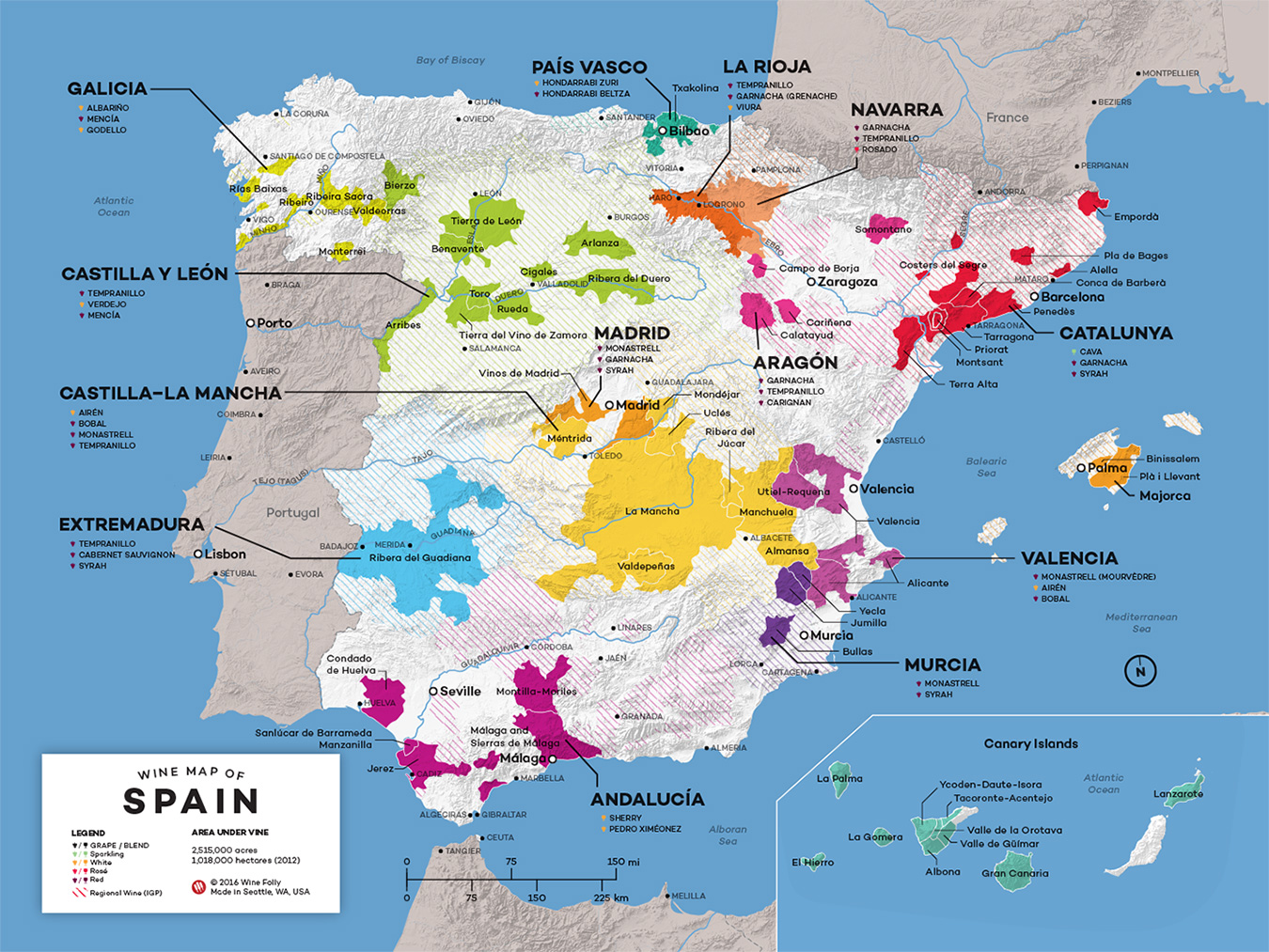
Without further ado, here's what we drank (my favorites in bold, and here's a map if it's helpful):

  1. 2017 Bodegas y Viñedos Ponce "La Estrecha" Manchuela ($27): ah, now here's a very light summer red, very easy drinking, no rough edges. Made from Bobal, a grape varietal I'd never had before. Lovely, but I wish it were about $10 less. Wine Advocate 96 pts.
  2. 2016 Castro Candaz "Finca El Curvado" Ribeira Sacra ($33): a field blend of mostly Mencía with some Merenzao (aka Trousseau), Brancellao, and Godello, this was my favorite of the night. A lighter red, reminiscent of better French cru Beaujolais wines, this was vibrant and alive in the glass. I'd be even more excited if it were a little cheaper, but I'm buying more of this. 5,000 bottles made, Wine Advocate 93 pts.
  3. 2017 Raul Perez "Ultreia St-Jacques" Mencía Bierzo ($18): A field blend of Mencia, Alicante Bouschet, Pan y Carne and some white varieties, fermented with natural yeast in old oak tanks using 100% stems and no temperature control. Of the three under-$20 bottles that we tried, this was my favorite (although I also quite like the Lesmos Rioja). Decanter 93 pts:
  4. 2016 Raul Perez La Vizcaina "El Rapolao" Bierzo ($35): another Mencia-based blend from the same wine-maker as #3, this one clearly was the "better" bottle, showing what you get when you spend more. However, while I thought this was good, I didn't think it was very distinctive or interesting. 900 bottles made, Decanter 96 pts. 
  5. 2010 Bodegas Casa Juan Señor de Lesmos Reserva Rioja ($40 in magnum): poured from the big bottle, I think this is a great example of why Rioja is my favorite red wine at the $20 price point. This is 9 years old, has some real character, would pair well with a wide range of food, and does not taste like generic supermarket wine (as do so many New World wines in this price bracket). 
  6. 2009 Bodegas Muga "Selección Especial" Reserva Rioja ($40): a nice demonstration of what you get when you spend more in Rioja, I thought this was like #5 but with more everything. Will get better with age. A blend of 70% Tempranillo, 15% Garnacho, 10% Graciano and 5% Mazuelo, 240,000 bottles produced (!!), Wine Advocate 92 pts. 
  7. 1973 Vina Berceo Gran Reserva Rioja (~$50): wow, thanks to Orion, we had a chance to try this 46 year old bottle. The wines of Rioja are known for their aging potential, especially for the Gran Reserva selections, but nearly a half century is quite a feat. While all the rough edges had been polished off from this, it still had some acid on the finish and a lovely, sherry-like quality. Still drinking quite well, which is a small miracle. 
  8. 1996 Bodegas Reyes "Teofilo Reyes" Ribera Del Duero ($35): Ribera del Duero competes with Rioja for making great reds from Tempranillo. With 23 years on the bottle, I thought this was a fantastic value at $35 (sadly, there were only a couple bottles at K&L and they've since sold out). Wine Enthusiast 94 points.
  9. 2016 Black Slate "Porrera" Priorat ($18): 50% Garnacha, 40% Cariñena and 10% Cabernet Sauvignon. This was my least favorite of the three under-$20 wines that we tried, striking me as a relatively generic "international" style red. Perfectly good, mind you, but just not terribly different from lots of other inexpensive reds. Perhaps a sign that the much-praised Priorat region is now attracting wine makers who are producing wines to appeal to the large export markets? 35,000 bottles made, Wine Advocate 92 pts.
For more details on these wines, you can also look at the tasting notes cheat sheet that I used while pouring.