28 December 2019

Live Music Q4 2019

Sixteen shows this quarter. That brings the annual total to 45 (29 + 16), which is a 15-year high and well above my average of 38 shows per year.

Overall, however, I'd say I'm having slightly less fun going to shows these days than I once did. Perhaps it's a sign to dial back the number? Perhaps it's a sign that I'm less willing to tolerate the annoyances that come with rock shows (people talking loudly next to you, standing for hours, unclear start times for the headliner, the unpredictable commutes to Oakland, etc.). Something to monitor, I guess.

This quarter, the highlights were definitely Gogo Penguin (that drummer!), Marika Hackman (all the best singer-songwriters right now seem to be lesbians from Australia), Meute (brass band that does covers of electronic music hits, yes!), and FKA Twigs (those costume changes!).
  • Gogo Penguin (performing alternative soundtrack for Koyanisqatsi)
  • Gogo Penguin
  • Nick Cave (an "in conversation" performance)
  • Thom Yorke
  • SF Symphony (open rehearsal)
  • Meute
  • Lucy Dacus
  • Big Thief
  • Cat Power
  • Marika Hackman
  • FKA Twigs
  • Battles
  • SF Symphony's Soundbox
  • Alexander String Quartet 
  • Shawn Colvin & Mary Chapin Carpenter
  • The New Mastersounds

24 December 2019

Music Consumption 2019


CDs purchased:
Digital album downloads:
CDs from LaLa swaps:
Digital singles downloaded:
# of music service subs:
Live shows attended:
04
86
-
-
50
-
30
05
76
-
-
38
-
26
06
50
44
69
63
1
36
07
64
70
28
22
1
35
08
62
65
11
38
1
44
09
101
50
7
60
1
35
10
59
12
-
22
-
35
11
73
13
-
58
-
36
12
48
12
-
37
-
28
13
58
11
-
28
-
32
14
37
12
-
39
-
44
15
43
1
-
14
-
38
16
31
2
-
17
-
38
17
14
16
-
4
2
38
18
18
10
-
5
2
40
19
34
12
-
1
3
45

Compared to last year, not that much changed. The biggest change the addition of yet another music service. Qobuz has joined Spotify and TIDAL on my list (and I've added a new line to the annual table to reflect my music subscription habits, since they now account for the majority of my recorded music spending). This is mostly because I'm an audiophile nerd and really appreciate that TIDAL and Qobuz bring lossless streaming to me (higher quality audio than Spotify, essentially), and both integrate with Roon, which is the music management software that I adore. This brings my monthly music subscription bill to $50/mo. or $600/yr. As I predicted 20 years ago, the music industry is making much more money from me today than they did at the turn of the century (particularly when you consider that there's no retailer taking 50% off the top).

Surprise, surprise, my CD purchasing is up! But it's not quite what it seems. Now that CDs have become so unpopular, the prices have plummeted, which means I find I'm picking up used CDs to fill gaps in my catalog or to "upgrade" from old mp3 from my long-gone eMusic subscription days. About a dozen of those are classical CDs I picked up for a couple dollars each. Two are obscure albums that are not available on the major streaming services (one from Ida, one from Pooka). And 11 are the Kate Bush reissues that came out this year.

So, if we're talking about *new* CDs, that number continues dwindling for me. But I still like buying the albums that I really like. But in recent years, that means buying a lossless digital download, most often from Bandcamp, rather than buying a CD. Now that my music collection is all ripped to hard drive (with multiple backups, just in case), CDs are just clutter. Plus, artists generally get to keep much more of the overall take on a site like Bandcamp than they would for CD sales that run through their distributor/label.

Finally, in something of a surprise, it looks like I hit an all-time high for live music this year. Not exactly sure how that happened, but that's the subject for a different blog post, coming soon.

2019 in Books


In 2019, I read 47 books. At least that's what Goodreads tells me. And yes, one was Tolstoy's Anna Karenina, which I did not like. That's a lot of books and partly answers the question, "what have you been doing now that you're not working?" Of those books:
  • 17 were non-fiction (36%)
  • 22 were sci-fi or fantasy (47%)
  • 5 were re-reads from my youth (10%)
There wasn't a single book that jumped out as my favorite or one that I would universally recommend. Nevertheless, here are a few that I enjoyed: 
  • in the non-fiction category, Charles Mann's The Wizard and The Prophet taught me about the history of science and made me significantly better informed about trends in energy, food, water, and climate change. Mann is among my favorite non-fiction authors (I also listened to the audiobook of 1491 this year, and am listening to the audiobook of 1493 right now); if you like Jared Diamond (of Guns, Germs, and Steel fame), you're likely to enjoy Mann's books;
  • in the fantasy category, Erin Morgenstern's The Night Circus was my favorite, creating a magical world with language that reminded me of Neil Gaiman and David Mitchell, without being quite like either of them (I also read and enjoyed her new book, The Starless Sea, but not as much as The Night Circus); 
  • another fantasy book I would recommend whole-heartedly is The Rook by Daniel O'Malley (ignore the television adaptation), which is basically Men In Black set in the UK with a female protagonist who happens to have amnesia; 
  • in the sci-fi category, I especially enjoyed The Murderbot Diaries by Martha Wells and Player of Games by Iain Banks, both of which are facially interested in artificial intelligence and its limits, but really illuminate human society and what ties it together;
  • and last, but not least, a strong recommendation for The Light Source, the first novel by my friend Kim Magowan, weaving from multiple POVs over the span of decades the story of a group of friends who revolve around two interesting women. 

23 November 2019

Wine Tasting: Age on Wine


Older wines are generally thought to be better than young wines. But why? What difference does the passing of years make? Well, one way to answer that would be to taste several wines, pairing their newer vintages with old. I last did a tasting like this in 2012, so we were overdue. Thanks to the amazing inventory of K&L Wines, I was able to gather these four paired wines last week, rather than cellaring them myself for 21 years.

What did we learn? Well, I thought the two bottles from Bordeaux, 21 years apart, told the clearest story. The older wine drank as a well-integrated experience, with tannins, fruit, green pepper, and lots of earthy characteristics, all coming together beautifully. Its younger sibling had a lot more of some of these (tannin, fruit), a lot less of others (earthy characteristics), but presented with much less integration, almost sequentially. Time smooths off the tannic pucker, while (hopefully) bringing initially unbalanced characteristics into balance. At least, that seems to be the idea where wines are built to age. Most wines, especially at prices under $40, are not designed to age, so how those turn out is a different question...

Thanks to all who joined us! What we had below, with my favorites in bold, as usual.

  1. 1994 Marqués de Murrieta Ygay Reserva Rioja ($45): made mostly of Tempranillo grapes, from one of the oldest wine producers in Rioja (1852!), this wine split the crowd, with many put off by its boldly sour finish. Although wines from Rioja are meant for long aging (especially the "Reserva" and "Gran Reserva" wines), I thought the imbalance on the finish suggested it was maybe a little over the hill. I still liked it, however, but can't really recommend it at $45/bottle. 
  2. 2015 Marqués de Murrieta "Finca Ygay" Reserva Rioja ($24): So different, lighter, higher toned, more like what most people expect from a Spanish red. And a good value. But less interesting than its older sibling. 80% Tempranillo with 12% Graciano, 6% Mazuelo and 2% Garnacha, a little more Graciano and Mazuelo, produced with grapes from a diversity of the 30 different plots within the estate. Fermented in stainless steel and matured in American oak barrels for 18 months. 
  3. 1995 Coufran, Haut Medoc ($35): Ah, Bordeaux, where the reds are built to age, and this bottle shows why. Unlike its much younger sibling, this wine delivered a well-integrated experience, with fruit, tannin, green bell pepper, and earthy secondary characteristics all happening together, without any one aspect dominating. This wine (which probably retailed for under $20 on release) is in its prime drinking years now, 24 years later. A great wine for roast beef! 85% merlot, 15% cabernet sauvignon.  
  4. 2016 Coufran, Haut-Médoc ($19): Same wine as #3, but 21 years younger. And, relatively speaking, a complete mess. Not bad, but dominated by tannin and fruit and oak, which come on sequentially, rather than as an integrated whole. When compared to #2 today, this wine loses the value contest. But in 20 more years, it's much harder to say which one I'd prefer. Lesson: Bordeaux red wine often requires age to really display what makes it so special. 
  5. 2011 Vincent Paris "Granit 30" Cornas ($40): from the Northern Rhone in France, this syrah-based wine from a young upstart wine-maker shows that well-made wines (and wine-makers) don't need 20 years to mature. I thought this was excellent and drinking perfectly, only 8 years on, with smooth tannins and well-integrated fruit, also showing secondary characteristics. I'm buying a couple more. 
  6. 2017 Vincent Paris "Granit 30" Cornas ($30): only six years younger, and still quite nice, but a great illustration of how even a few years can pull a wine together. But if you have the patience, you can save $10 by buying now and cellaring it for 6 years yourself! I might...
  7. 2003 Turley "Pesenti" Paso Robles Zinfandel ($35): one of the early vineyards from the early champions of single-vineyard Zins from Paso Robles. Turley has a mixed reputation for aging well (and thus can over time fall, rather than rise, in price). But I thought this 2003 was lovely. Despite the 16% alcohol, this didn't come across as sweet or jammy, but instead had great depth, with lots of secondary leather and earthy notes. In fact, tasted blind, I would not have guessed this was a Zin at all. Great value at this price, but this was the last one K&L had. 
  8. 2017 Turley "Pesenti Vineyard" Paso Robles Zinfandel ($50): like its older sibling, this one was near 16% alcohol. But what a difference time (and a different wine-maker) can make! This one was all blackberry compote, with a rich, sweet mid-palate. I still liked it (as I like all Zins), but this was easy to spot as a big California Zin. Hard to know, but I'm guessing it's not going to mature like the 2003 has, probably thanks to the change in wine-makers altering things. 

21 October 2019

Wine tasting: Spanish Reds


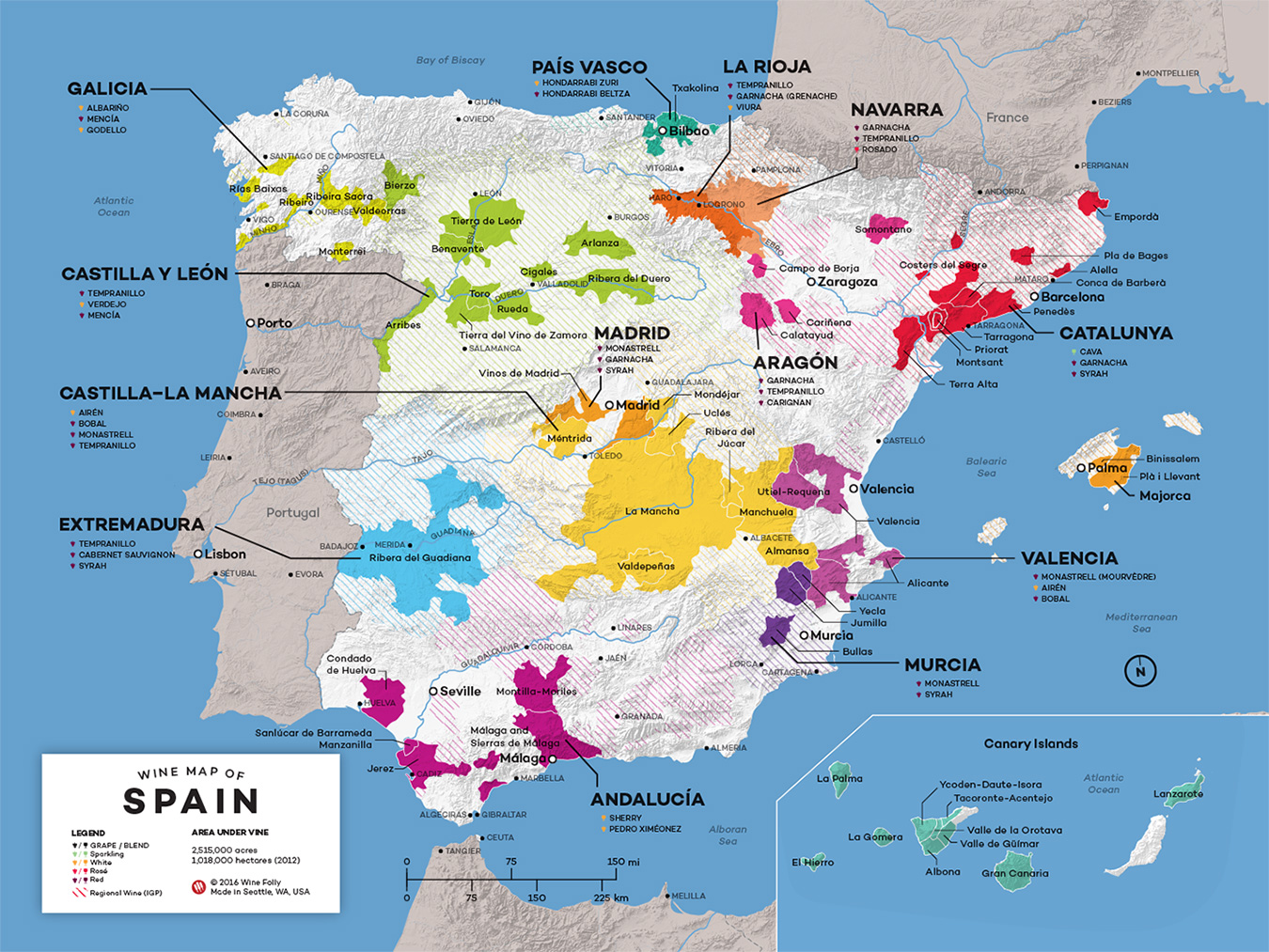
Well, that confirmed my long-standing belief that Spain is the best bet for high-value red wines. We had a reasonably good regional variation (Rioja, Ribera del Duero, Bierzo, Ribiera Sacra, Manchuela, Priorat) and a wide assortment of varietals (Tempranillo, Mencia, Garnacha, Bobal). However, given the amazing variations across Spain's many wine growing regions, we barely scratched the surface. The one common element across all of them was value. You'd be hard pressed to get bottles this good for the same price from Californian or French producers. And every one of these wines had great potential for pairing with food.

Without further ado, here's what we drank (my favorites in bold, and here's a map if it's helpful):

  1. 2017 Bodegas y Viñedos Ponce "La Estrecha" Manchuela ($27): ah, now here's a very light summer red, very easy drinking, no rough edges. Made from Bobal, a grape varietal I'd never had before. Lovely, but I wish it were about $10 less. Wine Advocate 96 pts.
  2. 2016 Castro Candaz "Finca El Curvado" Ribeira Sacra ($33): a field blend of mostly Mencía with some Merenzao (aka Trousseau), Brancellao, and Godello, this was my favorite of the night. A lighter red, reminiscent of better French cru Beaujolais wines, this was vibrant and alive in the glass. I'd be even more excited if it were a little cheaper, but I'm buying more of this. 5,000 bottles made, Wine Advocate 93 pts.
  3. 2017 Raul Perez "Ultreia St-Jacques" Mencía Bierzo ($18): A field blend of Mencia, Alicante Bouschet, Pan y Carne and some white varieties, fermented with natural yeast in old oak tanks using 100% stems and no temperature control. Of the three under-$20 bottles that we tried, this was my favorite (although I also quite like the Lesmos Rioja). Decanter 93 pts:
  4. 2016 Raul Perez La Vizcaina "El Rapolao" Bierzo ($35): another Mencia-based blend from the same wine-maker as #3, this one clearly was the "better" bottle, showing what you get when you spend more. However, while I thought this was good, I didn't think it was very distinctive or interesting. 900 bottles made, Decanter 96 pts. 
  5. 2010 Bodegas Casa Juan Señor de Lesmos Reserva Rioja ($40 in magnum): poured from the big bottle, I think this is a great example of why Rioja is my favorite red wine at the $20 price point. This is 9 years old, has some real character, would pair well with a wide range of food, and does not taste like generic supermarket wine (as do so many New World wines in this price bracket). 
  6. 2009 Bodegas Muga "Selección Especial" Reserva Rioja ($40): a nice demonstration of what you get when you spend more in Rioja, I thought this was like #5 but with more everything. Will get better with age. A blend of 70% Tempranillo, 15% Garnacho, 10% Graciano and 5% Mazuelo, 240,000 bottles produced (!!), Wine Advocate 92 pts. 
  7. 1973 Vina Berceo Gran Reserva Rioja (~$50): wow, thanks to Orion, we had a chance to try this 46 year old bottle. The wines of Rioja are known for their aging potential, especially for the Gran Reserva selections, but nearly a half century is quite a feat. While all the rough edges had been polished off from this, it still had some acid on the finish and a lovely, sherry-like quality. Still drinking quite well, which is a small miracle. 
  8. 1996 Bodegas Reyes "Teofilo Reyes" Ribera Del Duero ($35): Ribera del Duero competes with Rioja for making great reds from Tempranillo. With 23 years on the bottle, I thought this was a fantastic value at $35 (sadly, there were only a couple bottles at K&L and they've since sold out). Wine Enthusiast 94 points.
  9. 2016 Black Slate "Porrera" Priorat ($18): 50% Garnacha, 40% Cariñena and 10% Cabernet Sauvignon. This was my least favorite of the three under-$20 wines that we tried, striking me as a relatively generic "international" style red. Perfectly good, mind you, but just not terribly different from lots of other inexpensive reds. Perhaps a sign that the much-praised Priorat region is now attracting wine makers who are producing wines to appeal to the large export markets? 35,000 bottles made, Wine Advocate 92 pts.
For more details on these wines, you can also look at the tasting notes cheat sheet that I used while pouring. 

Live Music Q3 2019

Bon Iver at the Chase Center
After the torrid pace of Q2, I slowed down to a more manageable pace. This quarter brings my total to 29 for the year so far, comfortably passing my annual target of 26 shows. Mitski was a highlight, performing among the last of her shows before an announced hiatus. Other highlights in bold, per usual.
  • Mitski
  • Julia Holter
  • Better Oblivion Community Center
  • Bon Iver
  • Mountain Goats
  • Explosions in the Sky


11 August 2019

Wine Tasting: Chardonnay


We had a small crowd, but we tried a lot of wine! Thanks to those who made it.

This offered a very good overview of different approaches to Chardonnay. Overall, my conclusions were (1) stay away from California Chardonnay under $40 and (2) at almost all price points, the French offer better wine, dollar-for-dollar. That said, there are some great California Chardonnays out there, if you're willing to hunt and pay for them. And we should all be trying more Chardonnays from Burgundy, especially at lower price points. If only those labels and micro-regions weren't so darn confusing!

Here's what we drank, with my favorites in bold:

  1. 2014 La Chablisienne Chablis 1er Cru "Beauroy" $27: Chablis is an area in Burgundy that makes wonderful, relatively affordable Chardonnays, generally finished in steel tanks rather than oak barrels. La Chablisienne is the largest producer in all of Chablis, possibly accounting for up to 35% of the entire production in Chablis. I thought this bottle offered a great dose of what makes Chablis so food-friendly: lots of acid, good fruit, and mineral finish. Would be great with a dozen oysters. 
  2. 2015 Keller Estate "La Cruz Vineyard" Sonoma Coast Chardonnay $20 (Elsewhere $40): Oh, this is what gives California Chardonnay a bad name. Right out of the bottle, the overwhelming impression was buttered popcorn. This is what I'm afraid of when I see affordable California chards: too much butter, too rich, too little acid, a mystery what food you'd pair it with. 
  3. 2016 Hilliard Bruce "Venus" Sta. Rita Hills Chardonnay $25 (Elsewhere $50): A much better California offering than the Keller, I thought the description by Vinous hit the nail: “Bright citrus and floral notes are beautifully lifted throughout. Light tropical inflections develop with time in the glass, adding nuance as well as character.” At $25, not a bad value. At $50, no way. 
  4. 2014 Domaine Renaud Pouilly-Fuissé Vieilles Vignes $20: From the famous 2014 vintage, I thought this was perhaps a bit past its prime, showing as soft on the palate. Good complexity, however, and well balanced overall. As one person put it, a wine for sitting alone and crying on a cloudy day.  
  5. 2015 Domaine Auvigue Pouilly-Fuisse Solutré $20: From a wine making family dating back to 1629, made from organic grapes. The best value of the evening, in my view. For $20 at Costco, you get a real French Burgundy, showing solid balance of complex fruit and food-friendly acid finish. Maybe a little too much acid. But for $20, it outclassed the California wines under $40. 
  6. 2014 Greywacke Chardonnay Marlborough $30 (Elsewhere $40): New Zealand! Huge aromas of charred oak, but nearly no oak on the palate, which instead was dominated by tropical fruit and excellent acid on the finish. Delivered excitement over subtlety. This was one of my favorites of the evening, especially at $30. 
  7. 2013 Failla "Chuy Vineyard" Sonoma Valley Chardonnay $44: The Chuy Vineyard, planted in 1964, is located on the Sonoma side of Mount Veeder. Now here is a Chardonnay that demonstrates the promise of California. Complex, balanced, with good acid on the finish, this was the measure of any of the French wines (but at a higher price). 
  8. 2011 Domaine Bruno Colin Chassagne-Montrachet 1er Cru "La Maltroie" $35: Oh, this is why France is so hard to beat when it comes to Chardonnay. Although white Burgundies are often over $100 per bottle, even the more basic bottles like this deliver bright fruit, hints of complex baking spices, and enough acid on the finish to pair well with lots of food.
  9. 2012 Jacques Bavard Meursault $40: Another great, reasonably priced Burgundy wine, this time leaning toward the darker flavors and bigger dose of baking spices. A great introduction to the Kongsgaard, I thought, because it offered a similar style, but with a lot less intensity and complexity. 
  10. 2007 Kongsgaard Napa Valley Chardonnay $80 (current vintages $120): I put this in as a ringer, to demonstrate both what Chardonnay is capable of, and what California is capable of. As with many other varietals, Chardonnay at these prices is like a completely different wine. Much richer and more intense than any of the other wines, this offered many layers of complexity, finishing with a surprisingly powerful beam of acid, given its age. 
  11. 2012 Copain "Laureles Grade" Monterey County Chardonnay $40: So, we should have had this earlier, but I forgot that I opened it until the end of the evening. Another very strong California bottle, showing richness without too much oak. A much brighter style than Bavard or Kongsgaard. But, frankly, my palate was pretty far gone by this point...


01 August 2019

Revisiting the Music of 2000


For a recent listening club session with friends, the theme was music from the year 2000. Nineteen years ago. Before smartphones. The peak of Napster. Just after the anticlimax of Y2K. The end of the first dot com bubble (more 2000 trivia here). I was living in San Francisco, recently returned from Seattle, soon to quit working as a junior associate at a big law firm and take a research fellowship at Berkeley.

On revisiting what I was listening to that year, I was struck by the narrowness of my musical exposure: I was very focused on Americana/alt-country singer-songwriters. This is a testament to how different things were when you had to buy a CD to try something--there was a lot less trying things out. So I kept to my lane: singer-songwriters. In the era of subscription streaming music services, I can now roam much more broadly, thankfully.

My favorite albums that year were:
  • PJ Harvey, Songs from the City, Songs from the Sea
  • Joseph Arthur, Come to Where I'm From
  • Ida, Will You Find Me
  • Thievery Corporation, The Mirror Conspiracy
  • D'Angelo, Voodoo
  • Shelby Lynn, I am Shelby Lynn
  • k.d. lang, Invincible Summer
In retrospect, I would probably demote the k.d. lang, Shelby Lynn, and Joseph Arthur albums. I still like them, but none feels indispensable now. I still stand by the others, especially PJ Harvey and Ida.

But looking at the sampler CDs I made for my friends that year, I see Dar Williams, Buddy Miller, Emmylou Harris, Neko Case, Rickie Lee Jones, Eleni Mandell, Elliott Smith, Noelle Hampton, and Sarah Harmer (strong showing by the singer-songwriter axis). There's also some electronica, showing the enduring influence of 1998's Kruder & Dorfmeister album and 1999's Moby album. So my samplers included tracks from Thievery Corporation (The Mirror Conspiracy), St. Germain (Tourist), and DJ Shadow + Cut Chemist (Brainfreeze).

Stand-outs that, in retrospect, I didn't love enough (and, in several cases, I didn't even hear):
  • Grandaddy, The Sophtware Slump
  • Sigur Ros, Ágætis byrjun
  • Godspeed You! Black Emperor, Lift Your Skinny Fists Like Antennas to Heaven
  • Elliott Smith, Figure 8 (although I don't think it's as great as some of his earlier stuff)
Albums that critics think I should have loved in 2000, but I'm still not loving:
  • Radiohead, Kid A (yes, I appreciate that it's pivotal, but no, I don't find myself reaching for it)
  • Outkast, Stankonia (yes, B.O.B. is great, as is Xplosion, but about half the tracks do nothing for me, plus all the misogyny) 
  • Eminem, The Marshall Mathers LP (I missed the whole Eminem thing, and I don't think I missed much in retrospect)
  • The Avalanches, Since I Left You (an album I appreciate, and that I can't manage to like as much as I'm supposed to)
And I'm still angry that it took so long for the music industry to approach the ease-of-use and infinite inventory that Napster was already providing in 2000.


19 July 2019

Live Music Q2 2019


The Yuma tent, Coachella 2019

That brings us to 23 shows so far this year (counting each day of festivals as one). On pace to obliterate my 26 show annual target.

Sofi Tukker at Coachella 2019
This quarter marked my return to Coachella after skipping last year. I'm still annoyed by the added crowds and sprawl after the 2015 expansion. And this year marked fewer older acts, but a big uptick in Euro contemporary techno (which can be hard to take seriously at 2p in the afternoon). Nevertheless, there were lots of very memorable moments, including Janelle Monae, Lizzo, Tierra Whack, Billie Eilish, Sofi Tukker, and Jon Hopkins (way better than the SF set I saw).

Other highlights this quarter included The Tallis Scholars, a remarkable 3 hour Amanda Palmer show, and seeing Courtney Barnett from the front row (thanks to a friendly usher that didn't want to leave those VIP seats empty). And also a spirited set from Chicago's Ohmme on the tiny stage at Amnesia.

Some additional special music-related events also happened, including (1) seeing David Byrne give a lecture for the Long Now Foundation; (2) Hamilton (second time, different cast); and (3) Hadestown (before it won the Tony for Best Musical!).
  • Cecile McLorin Salvant & Monterey Jazz Festival Band
  • The Tallis Scholars
  • SF Symphony "Great Performers" series: Midori & Thibidault
  • Coachella Day One (King Princess, JPEGMAFIA, Kero Kero Bonito, Kacey Musgraves, Tierra Whack, BLACKPINK, Rüfüs du Soul, Khruangbin, Janelle Monae, Childish Gambino, Yves Tumor)
  • Coachella Day Two (Agoria, Jambinai, The Messthetics, serpentwithfeet, Adriatique, The Interrupters, Hop Along, Bob Moses, Christine & the Queens, Billie Eilish, Stephan Bodzin)
  • Coachella Day Three (Jan Blomqvist, Razorbumps, Burna Boy, boy pablo, Pusha T, Alice Merton, Lizzo, 070 Shake, SOFI TUKKER, Khalid, Jon Hopkins, Ariana Grande)
  • Soccer Mommy
  • Amanda Palmer
  • Ohmme
  • Carsie Blanton
  • Girl Talk (at Clusterfest)
  • Courtney Barnett (at Clusterfest)
Billie Eilish at Coachella 2019
Courtney Barnett at Clusterfest 2019

16 June 2019

Wine Tasting: Petite Sirah


Even pizza deserves good wine. Perhaps *especially* pizza deserves good wine! And, for me, that perfect wine is Petite Sirah, the inky, tannic bottles that stain your tongue.

A Frenchman created Petite Sirah (aka Durif) by crossing Syrah and Peloursin in the 1880s. Imported into California shortly thereafter, the varietal has since largely been forgotten in Europe. The vast majority is now grown in California, where it's usually used as a blending grape in Zinfandels, lending grip and structure. (For more details on Petite Sirah, see here.)

You don't find much Petite Sirah bottled separately because of its very high tannin levels. And the wines we opened generally showed that (although the first two demonstrated that age and winemaking can ameliorate that). But I enjoyed them all, especially with pizza.

Here's what we had, my favorites in bold:
  1. 2000 Teldeschi Dry Creek Valley Petite Sirah ($30): a great demonstration of how 19 years in the bottle can tame the monster tannins that define this grape. The tannins were still there, but they were finer and better integrated (I think I finally understand what people mean by "sweet tannins"). Very little fruit here, but lots of other flavors showing. Really lovely. 
  2. 2013 Toulouse Thompson Vineyard Redwood Valley Petite Sirah ($32): a great demonstration of how winemaking style can inform a varietal. Toulouse is primarily a maker of pinot noir, and it shows in their interpretation of petite sirah. Soft, sweet, and approachable, the petite sirah signature tannin appears only at the end. This would be a great wine to stump wine experts in a blind tasting. 
  3. 2013 Ridge Lytton Estate Dry Creek Valley Petite Sirah ($30): 3% Zinfandel in this one. The first in our line-up to be what I consider "typical petite sirah", showing lots of tannin and structure. Always reliable, I thought it was upstaged in this line-up by the Carlisle. 
  4. 2015 Odonata Machado Creek Vineyard Santa Clara Valley Petite Sirah ($25): I got a clear eucalyptus/menthol profile from this one, which I liked quite a bit. Still drinking nicely the next day, this one probably will improve for several more years. Qualifies as the bargain of the night. 
  5. 2016 Stag's Leap Napa Valley Petite Sirah ($35): 79% Petite Sirah, 8% mixed Rhône varieties, 7% Grenache and 6% Syrah, aged for 12 months in 25% new American oak. A long-time champion of petite sirah, Stag's Leap makes a reliable bottle (they make 20,000 cases each year!). As the current release, I thought this was still too young, with a lot of unintegrated oak and tannins. But with 10 years on it, it might be a winner. Available at Costco! 
  6. 2009 Carlisle Sonoma Valley Petite Sirah ($33): Carlisle is famous for Zinfandel, but I thought this bottle made a great case for their petite sirah expertise. A blend from Bedrock Vineyard and Rossi Ranch, this one was showing beautifully after 10 years in the bottle. I guess you have to be patient (some of Carlisle's other petite sirahs are referred to by wine critics as "30-40 year wines"). 
  7. 2016 Preston Dry Creek Valley Sonoma County Petite Sirah ($38): the real monster of the evening, I thought pizza was a requirement for this one. In that context, however, I thought it was pretty great. Showing some fruit behind the huge tannins, this one drank even better the next day. 


05 April 2019

Live Music Q1 2019

Nils Frahm at The Warfield Theater

A somewhat unusual mix of things for this quarter, from Renaissance choral music to contemporary chamber electronica. But with 11 shows, off to a good start for 2019. Nils Frahm was the highlight for me, but Kid Koala and Low were also both great.
  • Tape Music Festival
  • Kid Koala (live rendition of Nufonia Must Fall)
  • Four Tet
  • Rhye
  • Mazzy Star
  • Sharon Van Etten
  • Russian Nat'l Orchestra
  • James Blake
  • Nils Frahm
  • Low (EMA opening)
  • SF Symphony (JS Bach, St. John's Passion)

Four Tet at The Great American Music Hall


13 January 2019

Wine Tasting: Tête de Cuvée


Whoa. That was quite an evening of champagne. Thanks to all who came and helped subsidize what ended up being more than $3,500 of bubbly. Holy cow. In 12 years, we've never gotten close to that before. I suspect we'll never reach it again.

My chief lesson this time is that more money and more age (generally) make for better champagne, even at these heady price points. For example, the 2002 Krug and the 2000 Cristal were the highlights of the evening for me, both over $250 a bottle. Sigh. That said, I thought the Ace of Spades didn't deliver value proportionate with its sky-high $300 price tag.

The Taittinger Comtes de Champagne proved itself the bargain of the evening (as it has in previous tastings), delivering the bright, citrus promise that Dom Perignon doesn't always deliver. And I still prefer Veuve Clicquot's Grande Dame over Dom Perignon, with the sentimental favorite of the evening being the 1998, which has appeared at every tasting over the past 12 years. 

As usual, I thought the bottles split between the lighter style (Dom Perignon, Comtes) and the darker, yeastier style (Grande Dame, Ace of Spades). The stand-outs for me this time, however, were the bottles that managed to walk the balance -- the 2002 Krug and all the Cristals. I wish I had bought more of the 2008 Cristal, which I suspect will be one for the ages.

Here's what we had, my personal favorites in bold:
  1. 2009 Moët & Chandon Dom Pérignon Brut Champagne ($155): Always close to 50/50 Pinot Noir and Chardonnay. This vintage is the first-ever non-sequential release (2008 is still unreleased) and is generally thought to be more suitable for early drinking than most vintages. Delivered the citrus pith and grapefruit notes that I expect from young Dom. 
  2. 1999 Moët & Chandon Dom Pérignon Brut Champagne ($300 in magnum): Not a famous vintage for Dom, but the contrast with the 2009 certainly illustrated the difference that 10 years makes. This one was deeper and more complex than the 2009 current-release, but still with the citrus lift at the end. 
  3. 2008 Veuve Clicquot "La Grande Dame" Brut Champagne ($160, but $127 at Costco!): In a first for Grande Dame, the 2008 vintage is 92% Pinot Noir. As usual, tasting after the Dom Perignon calls out the darker, yeastier character that makes me love this wine. At the Costco price, this is one worth buying more of! 
  4. 1998 Veuve Clicquot "La Grande Dame" Brut Champagne ($130): The only bottle that has appeared at every tete de cuvee tasting, this vintage is 64/36 Pinot Noir/Chardonnay. This stakes out the far end of the yeasty, dark flavor spectrum, now with hints of sherry. Probably past its prime, but still delicious. Pair with paté? If only I had another bottle... 
  5. NV Perrier Jouet Grand Brut ($37): This was the "level-set" bottle, to give us a reminder of what a "regular" bottle of champagne is like. I actually didn't get to taste it this time, but several mentioned that it was outclassed (as it should be, given the price difference!). 
  6. (A) 2008 Louis Roederer "Cristal" Brut Champagne ($270): The current release, but sold out most places, the 2008 is already being talked about as an epic vintage, garnering several 100 point ratings. Even so young, it was very special, walking the line between the lighter and darker styles, with lots of complexity. I wish I had another one to open in 10 years. If you see it, buy it.
    (B) 2000 Louis Roederer "Cristal" Brut Champagne ($225): A great illustration of the importance of age, I thought this spectacular and drinking perfectly right now. That's in contrast to 2007, when we first opened this vintage and no one liked it.
    (C) 2005 Louis Roederer "Cristal" Brut Champagne ($170): Still excellent, but overshadowed by both the 2000 and the 2008. 
  7. Krug "Grande Cuvée" 164 Ème Édition Brut Champagne ($160): The nonvintage Krug is the bottle you buy if you don't have the patience to wait for vintage tete de cuvee bottles to age. Always made from a blend of different vintages, this is from the base year of 2008, though the team at Krug utilized reserve wines all the way back to 1990 in this version. The final cépages is 48% Pinot Noir, 35% Chardonnay and 17% Pinot Meunier, with the wine spending eight years in the Krug cellars sur latte. I always like this bottle, but I thought it was outclassed by the 2002 that came next. Compared to that, this came across a bit too acid driven for me. On the other hand, it's very much cheaper...
  8. 2002 Krug Brut Champagne ($260): My favorite of the night, and the first vintage Krug I've ever had. From a very well-regarded vintage, this blends almost equal amounts of Pinot Noir and Chardonnay fleshed out with Pinot Meunier. What can I say? I thought it was perfect, showing lovely balance, complexity, and plenty of acid, coming across as having lots of years left. So good. So expensive. 
  9. NV Armand de Brignac "Ace of Spades" Brut Champagne ($300): the blingy gold bottle by the renowned champagne house now owned by Jay-Z, this one was clearly on the darker, yeasty side of the spectrum, reminiscent of the older Grande Dames we've had. 40% Pinot Noir, 40% Chardonnay, 20% Pinot Meunier and a blend of 3 vintages, 2009, 2010, and 2012, with dosage of 9g/l. I thought this was lovely, but way overpriced. At the same price, I'd take the vintage Krug or the Cristal over this. Or two bottles of Grande Dame. 
  10. 2006 Taittinger "Comtes de Champagne" Brut Blanc de Blancs Champagne ($130): the only 100% Chardonnay ("blanc de blanc") of the evening, this bottle is always a reliable favorite and a relative bargain. Representing the lighter, more citrus-driven style, I thought it was as good as the Dom Perignons and more consistent across vintages. In the words of one wine critic: "Comtes de Champagne remains the single best value (in relative terms) in tête de cuvée Champagne."
  11. (A) 2006 Taittinger "Comtes de Champagne" Brut Rosé ($160): We finished with a couple of rosé bottles. First impression of this one: strawberries! The addition of 15% Pinot Noir to the famous Taittinger Chardonnay delivers a rounder wine that seems sweeter and more relaxed than the nervy Comtes blanc de blanc. Another one that makes me think of paté or cheese, rather than oysters.
    (B) 2006 Deutz "Amour de Deutz" Brut Rosé Champagne ($130): 55% Pinot Noir (from Aÿ, Verzenay and Bouzy) and 45% Chardonnay (from Avize, Chouilly and Villers-Marmery).
    A left-over from the 2017 tasting, where this was a favorite then, still showing beautifully. On the darker side of the spectrum, this nevertheless came across as more structured and austere than the Taittinger rosé. At this price, it's an excellent value for tete de cuvee rosé, which usually has a bigger surcharge over the regular, non-rosé bottles. 
For any who might be interested, here are my notes from the previous sessions: 2007, 2009, 2012, 2015, 2017.


01 January 2019

Music Consumption 2018


CDs purchased:
Digital album downloads:
CDs from LaLa swaps:
Digital singles downloaded:

Live shows attended:
04
86
-
-
50

30
05
76
-
-
38

26
06
50
44
69
63

36
07
64
70
28
22

35
08
62
65
11
38

44
09
101
50
7
60

35
10
59
12
-
22

35
11
73
13
-
58

36
12
48
12
-
37

28
13
58
11
-
28

32
14
37
12
-
39

44
15
43
1
-
14

38
16
31
2
-
17

38
17
14
16
-
4

38
18
18
10
-
5

40

Another year, another set of data. Actually, another two years, since I somehow forgot to update this last year. I've managed to reconstruct that, so now we have a complete set of data going back 14 years!

The biggest evident change here is the precipitous decline in CD purchasing over the past two years, as compared to years before. Reason #1: a shift to album downloads from Bandcamp and HDTracks (and, for Amanda Palmer, Patreon). CDs are now a hassle, since after I rip them, I don't really have a use for them. In fact, there's no longer a CD player left in the house. Reason #2: ever since transitioning from iTunes to Roon and subscribing to TIDAL, I have CD-or-higher resolution audio available on-demand. While that does leave me vulnerable to TIDAL's (likely) demise, in the meantime, it makes it hard to justify buying albums unless (a) they are unavailable on TIDAL or (b) I really, really don't want to be without the album.

Of course, this means that I'm now spending $35/month on streaming services ($20 to TIDAL for my full-resolution, high quality home listening; $15 to Spotify family plan for mobile and the rest of the household). While I'd love to rely on TIDAL completely, the truth is that Spotify's mobile app is leagues better and the sharing features are much more universally useful.

So that works out to $420/year in streaming spending, plus a couple dozen album purchases. That works out to roughly $700. That's roughly equivalent to my days of buying ~60 CDs per year (2009 was an outlier, since I was collecting a set of Bach cantatas that year...). But the big difference is that, back in the CD era, the retailer was keeping 50% off the top (and that's not even considering my used CD purchases, where the record label gets nothing). In the streaming era, the streaming services keep about half that much (25-30%).

So, net-net, the music industry is seeing more of my money now than ever before. Even better, the artists generally get a much better royalty cut from direct download services like Bandcamp and streaming services like TIDAL and Spotify, than they previously got for retail CD sales. And that's not mentioning the ~$100/year that I pay directly to Amanda Palmer via Patreon, skipping retailers and record labels both!